Horrockses Fashions
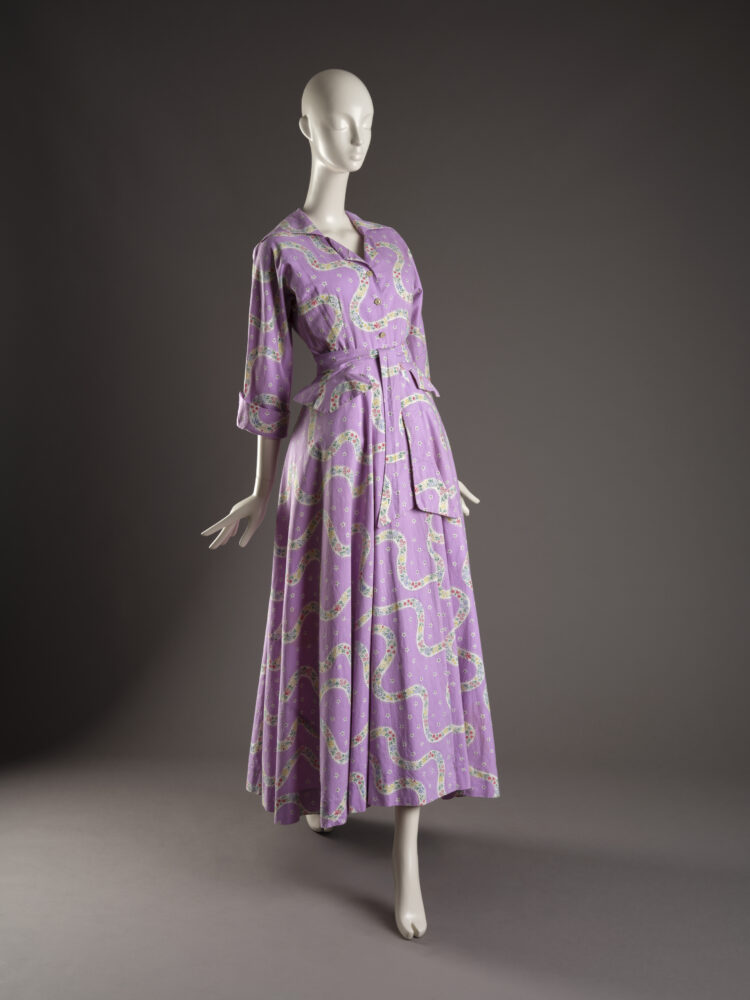
Pink Cotton House Coat with Continuous White Ribbon Pattern and Multicoloured Floral Design, Horrockses Fashions
Object Number: 2020.17.16
The designer of this pattern was Alistair Morton, arguably the most famous textile designer associated with Horrockses Fashions. For Horrockses, Morton worked as a freelance designer between 1947 to 1955, on a retainer of £62 for 40 patterns each year. His loosely drawn, often floral and geometric based patterns, in fresh colours and with banded horizontals became paradigmatic of the brand and were widely copied. It was Morton who established the firm’s signature look in the late 1940s and early 50s and founded the company’s success. There are designs on paper relating to this garment (in different colourways) in the collection at Abbott Hall in Kendal.
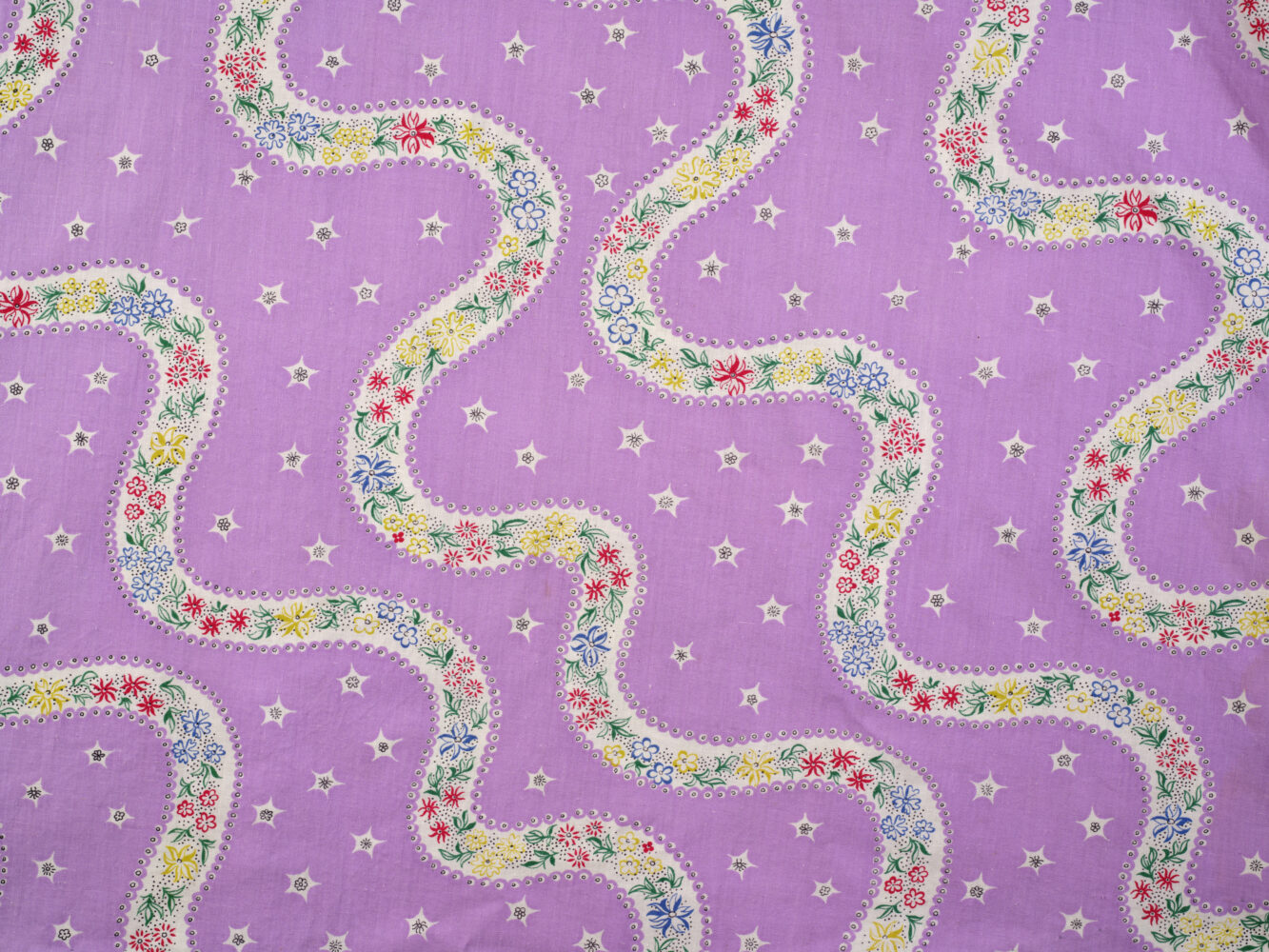
Pink Cotton House Coat with Continuous White Ribbon Pattern and Multicoloured Floral Design, Horrockses Fashions
Object Number: 2020.17.6
The designer of this pattern was Alistair Morton, arguably the most famous textile designer associated with Horrockses Fashions. For Horrockses, Morton worked as a freelance designer between 1947 to 1955, on a retainer of £62 for 40 patterns each year. His loosely drawn, often floral and geometric based patterns, in fresh colours and with banded horizontals became paradigmatic of the brand and were widely copied. It was Morton who established the firm’s signature look in the late 1940s and early 50s and founded the company’s success. There are designs on paper relating to this garment (in different colourways) in the collection at Abbott Hall in Kendal.
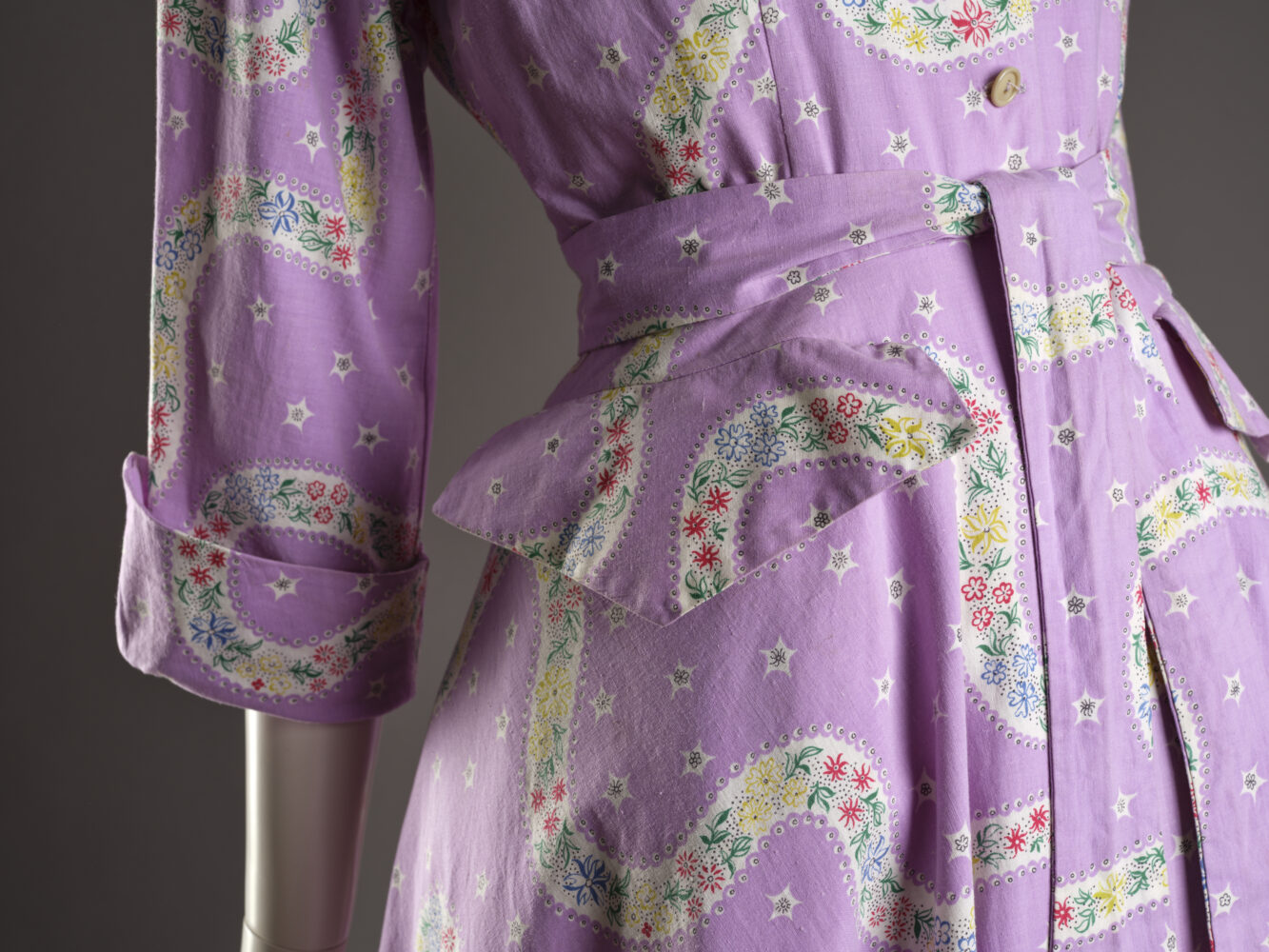
Pink Cotton House Coat with Continuous White Ribbon Pattern and Multicoloured Floral Design, Horrockses Fashions
Object Number: 2020.17.16
The designer of this pattern was Alistair Morton, arguably the most famous textile designer associated with Horrockses Fashions. For Horrockses, Morton worked as a freelance designer between 1947 to 1955, on a retainer of £62 for 40 patterns each year. His loosely drawn, often floral and geometric based patterns, in fresh colours and with banded horizontals became paradigmatic of the brand and were widely copied. It was Morton who established the firm’s signature look in the late 1940s and early 50s and founded the company’s success. There are designs on paper relating to this garment (in different colourways) in the collection at Abbott Hall in Kendal.
Cotton Salmon Pink and White Striped Sundress with Matching Bolero Jacket and Belt, Horrockses Fashions
Object Number: 2016.12.23
Also donated by Maryse Addison. This ensemble was designed as part of Horrockses Fashions Spring/Summer 1953 collection. It was featured in an on location shoot somewhere exotic for a fashion spread in Harper’s Bazaar Magazine in April 1953.
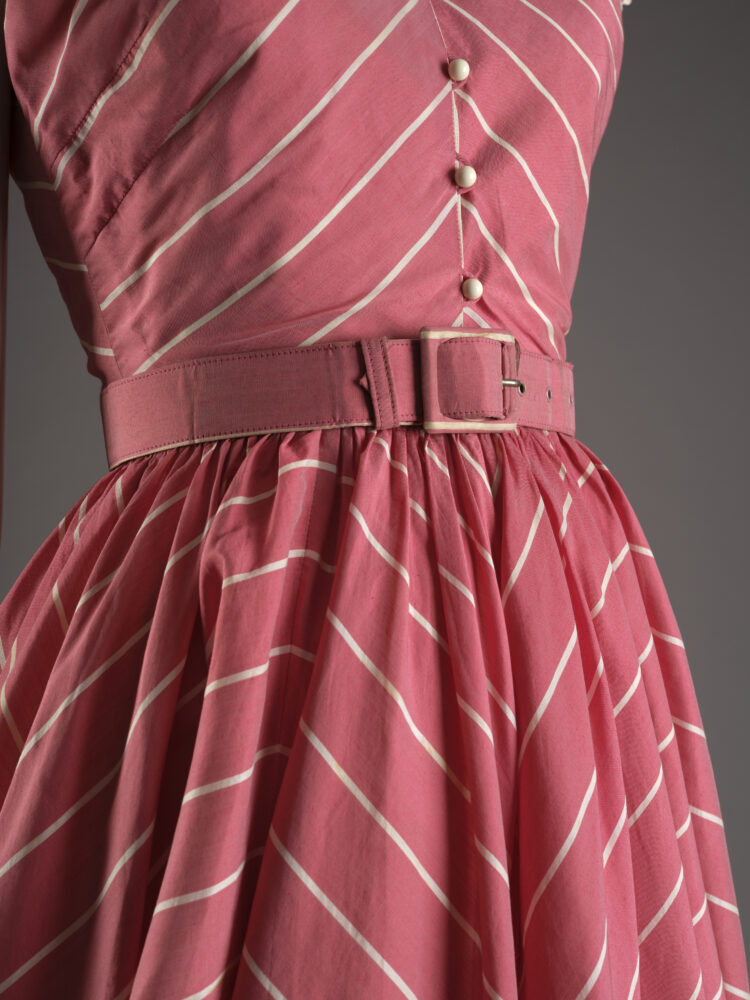
Cotton Salmon Pink and White Striped Sundress with Matching Bolero Jacket and Belt, Horrockses Fashions
Object Number: 2016.12.23
Also donated by Maryse Addison. This ensemble was designed as part of Horrockses Fashions Spring/Summer 1953 collection. It was featured in an on location shoot somewhere exotic for a fashion spread in Harper’s Bazaar Magazine in April 1953.
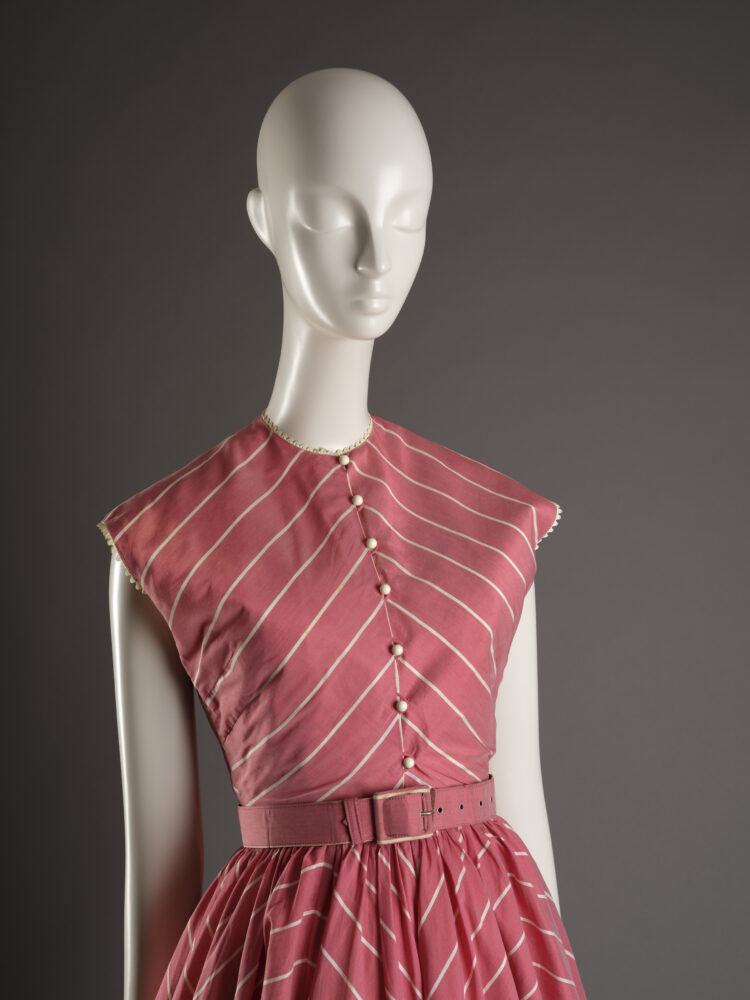
Cotton Salmon Pink and White Striped Sundress with Matching Bolero Jacket and Belt, Horrockses Fashions
Object Number: 2016.12.23
Also donated by Maryse Addison. This ensemble was designed as part of Horrockses Fashions Spring/Summer 1953 collection. It was featured in an on location shoot somewhere exotic for a fashion spread in Harper’s Bazaar Magazine in April 1953.
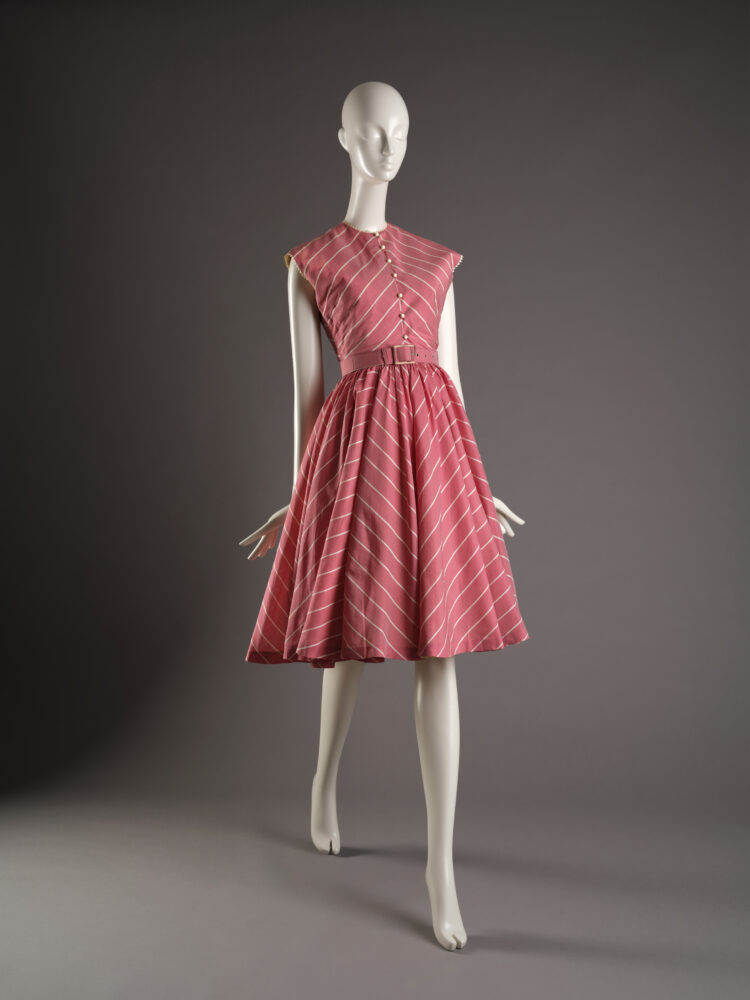
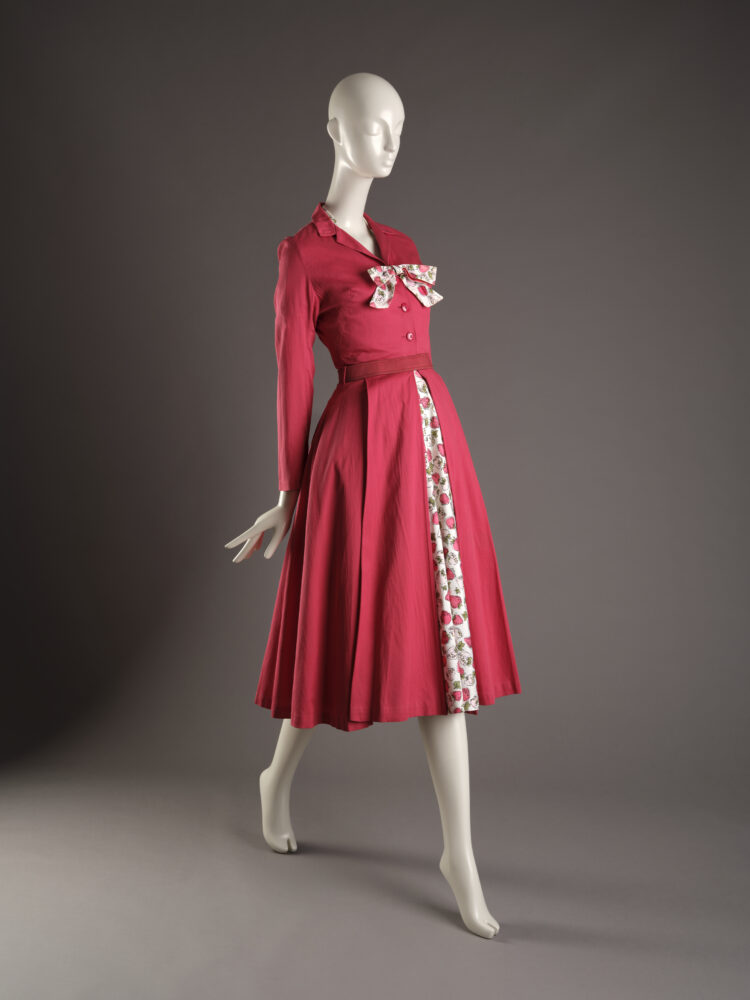
Red Cotton Coat & Strawberry Dress, Coat Lined with Strawberry Print Fabric, Horrockses Fashions
Object Number: 2016.12.13
One of the most strategic additions to The Harris’s Horrockses Fashions’ collection is the celebrated strawberry print dress , designed by John Tullis with a textile print created by Brigitte Dehnert (1926–1981). It was designed for the Spring/Summer 1954 collection, in the company’s signature cotton, and was paired with a striking red coat dress, the lining of which carried the same vivid strawberry motif. The Harris acquired the dress in 2023. The purchase was a considered curatorial decision, prompted by the museum’s existing example of the matching red coat dress with strawberry-print lining, donated by Maryse Addison.
Bringing the dress and coat together within the collection reconstituted a complete Horrockses’ ensemble, offering a rare opportunity to present the garments as they were originally conceived and marketed. An illustration of this ensemble was featured in Homes & Gardens magazine in March 1954, styled with white gloves and a hat, encapsulating the aspirational elegance of the period.
The acquisition is also of particular significance for its association with Brigitte Dehnert, a female freelance textile designer working for Horrockses in the 1950s. While little is known about Dehnert’s career, her commission for Horrockses underscores the company’s willingness to collaborate flexibly with independent designers, and its progressive approach to supporting creative talent within the post-war British fashion industry.
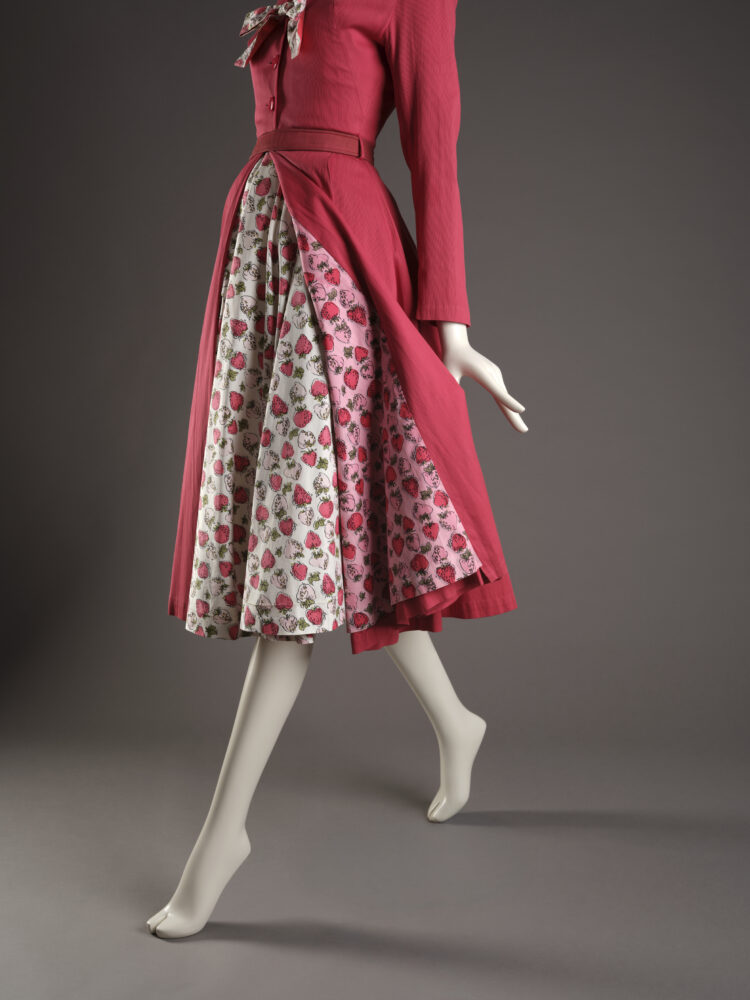
Red Cotton Coat & Strawberry Dress, Coat Lined with Strawberry Print Fabric, Horrockses Fashions
Object Number: 2016.12.13
One of the most strategic additions to The Harris’s Horrockses Fashions’ collection is the celebrated strawberry print dress , designed by John Tullis with a textile print created by Brigitte Dehnert (1926–1981). It was designed for the Spring/Summer 1954 collection, in the company’s signature cotton, and was paired with a striking red coat dress, the lining of which carried the same vivid strawberry motif. The Harris acquired the dress in 2023. The purchase was a considered curatorial decision, prompted by the museum’s existing example of the matching red coat dress with strawberry-print lining, donated by Maryse Addison.
Bringing the dress and coat together within the collection reconstituted a complete Horrockses’ ensemble, offering a rare opportunity to present the garments as they were originally conceived and marketed. An illustration of this ensemble was featured in Homes & Gardens magazine in March 1954, styled with white gloves and a hat, encapsulating the aspirational elegance of the period.
The acquisition is also of particular significance for its association with Brigitte Dehnert, a female freelance textile designer working for Horrockses in the 1950s. While little is known about Dehnert’s career, her commission for Horrockses underscores the company’s willingness to collaborate flexibly with independent designers, and its progressive approach to supporting creative talent within the post-war British fashion industry.
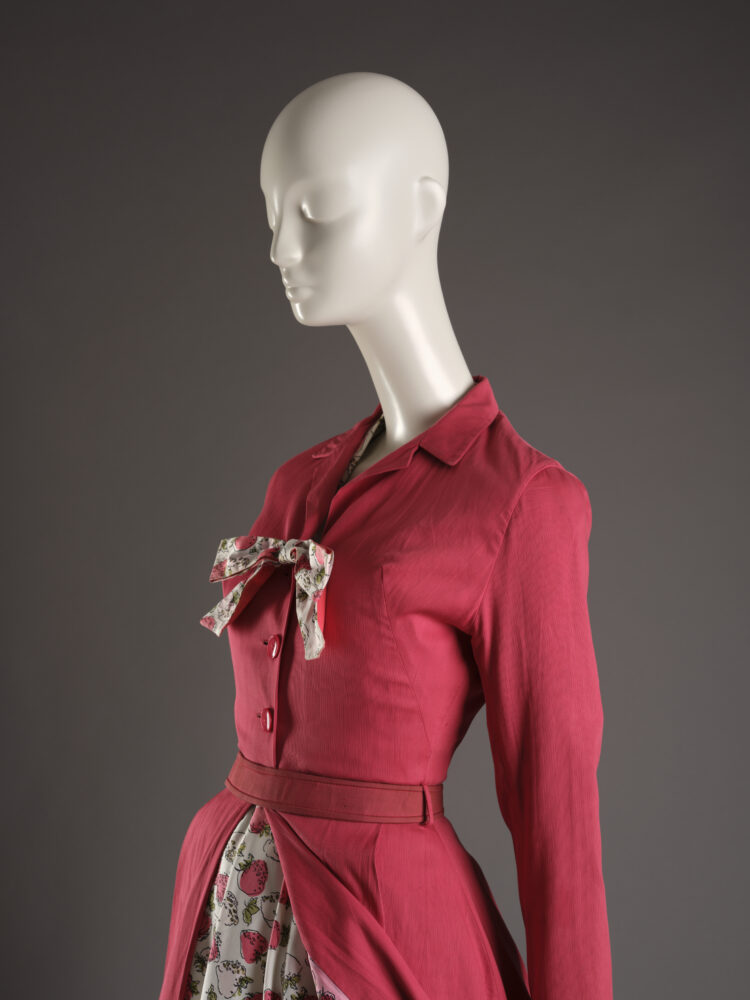
Red Cotton Coat & Strawberry Dress, Coat Lined with Strawberry Print Fabric, Horrockses Fashions
Object Number: 2016.12.13
One of the most strategic additions to The Harris’s Horrockses Fashions’ collection is the celebrated strawberry print dress , designed by John Tullis with a textile print created by Brigitte Dehnert (1926–1981). It was designed for the Spring/Summer 1954 collection, in the company’s signature cotton, and was paired with a striking red coat dress, the lining of which carried the same vivid strawberry motif. The Harris acquired the dress in 2023. The purchase was a considered curatorial decision, prompted by the museum’s existing example of the matching red coat dress with strawberry-print lining, donated by Maryse Addison.
Bringing the dress and coat together within the collection reconstituted a complete Horrockses’ ensemble, offering a rare opportunity to present the garments as they were originally conceived and marketed. An illustration of this ensemble was featured in Homes & Gardens magazine in March 1954, styled with white gloves and a hat, encapsulating the aspirational elegance of the period.
The acquisition is also of particular significance for its association with Brigitte Dehnert, a female freelance textile designer working for Horrockses in the 1950s. While little is known about Dehnert’s career, her commission for Horrockses underscores the company’s willingness to collaborate flexibly with independent designers, and its progressive approach to supporting creative talent within the post-war British fashion industry.