Horrockses Fashions
Cotton Dress with Matching Wrap Printed with Black/Grey Abstract Design, Horrockses Fashions
Object Number: 2004.46.1
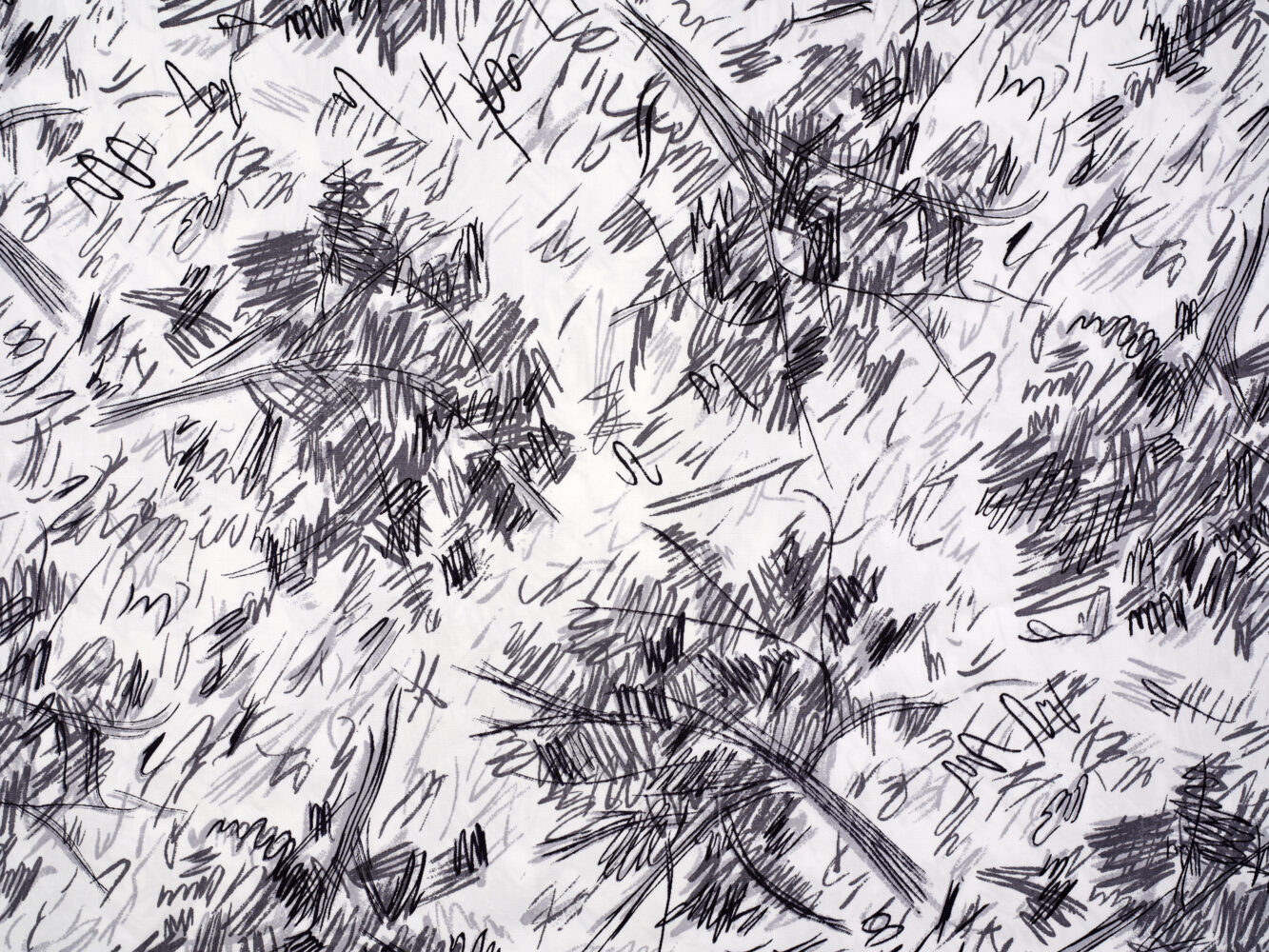
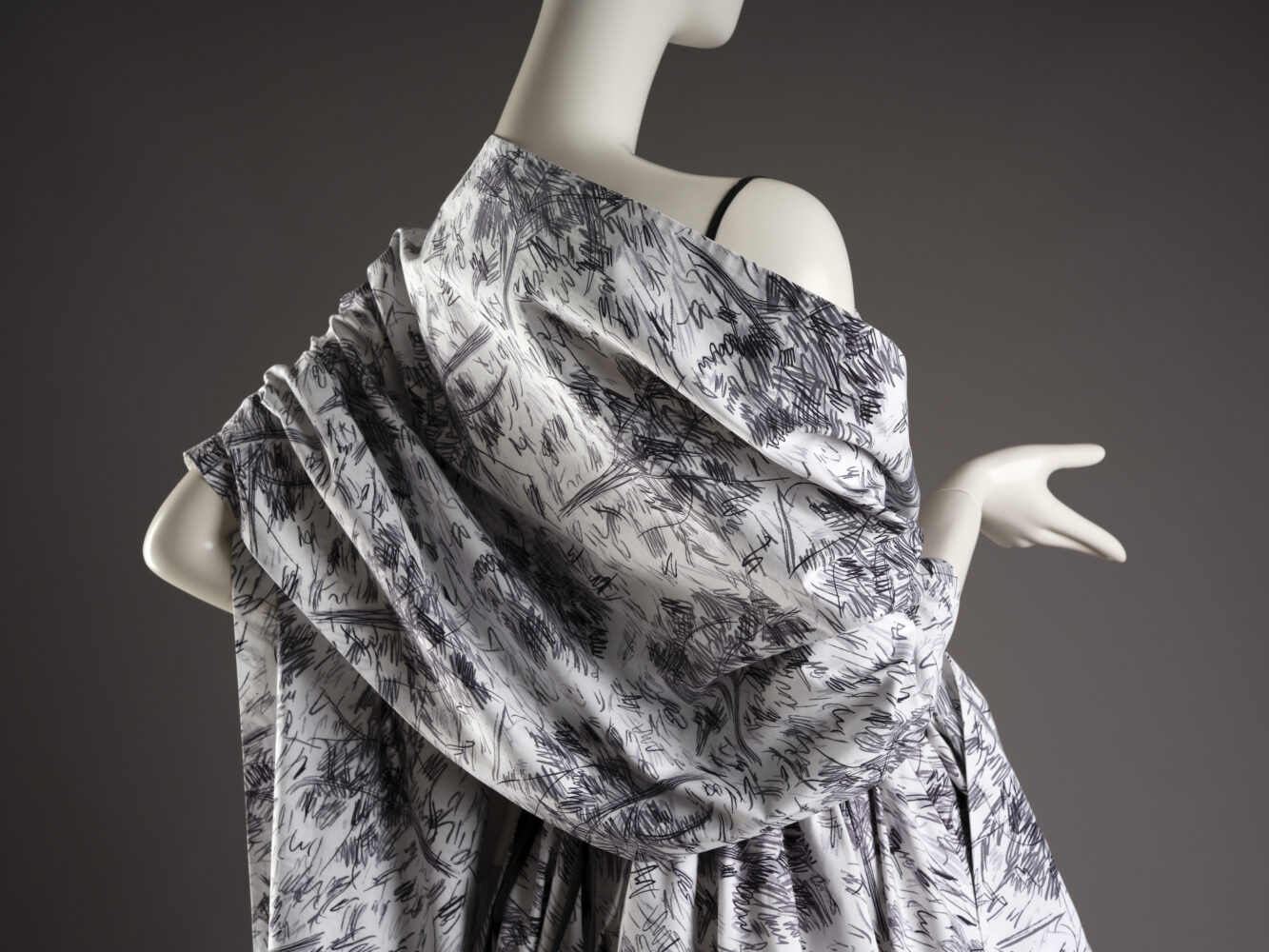
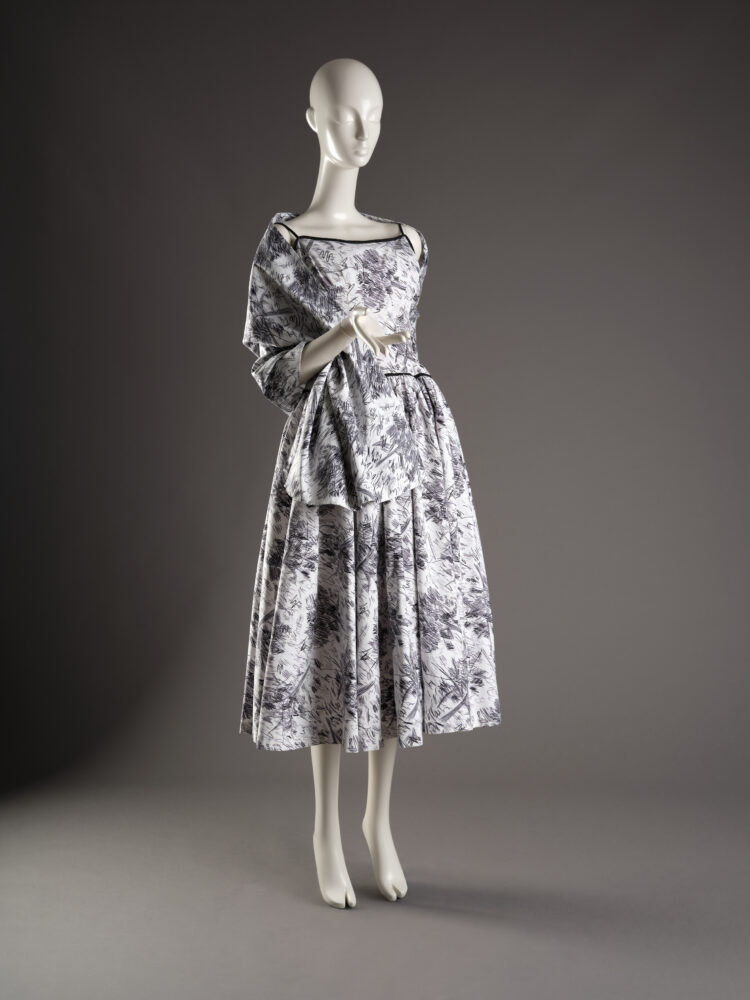
Purchased in Knightsbridge, this dress was one of eight Horrockses garments Mrs Margaret Edgar took with her to Aden, South Yemen, where she worked as a teacher in RAF schools. The striking cotton cocktail dress features a bold abstract print in graphite shades of black and grey on white, resembling quick, expressive pencil strokes. The lively, sketch-like pattern reflects the era’s fascination with abstract mark-making in modern art. The fitted bodice, gathered skirt and delicate spaghetti straps are accented with black trim at the neckline and waistband. It is accompanied by a matching wrap.
Cotton Dress with Matching Wrap Printed with Black/Grey Abstract Design, Horrockses Fashions
Object Number: 2004.46.1
Purchased in Knightsbridge, this dress was one of eight Horrockses garments Mrs Margaret Edgar took with her to Aden, South Yemen, where she worked as a teacher in RAF schools. The striking cotton cocktail dress features a bold abstract print in graphite shades of black and grey on white, resembling quick, expressive pencil strokes. The lively, sketch-like pattern reflects the era’s fascination with abstract mark-making in modern art. The fitted bodice, gathered skirt and delicate spaghetti straps are accented with black trim at the neckline and waistband. It is accompanied by a matching wrap.
Cotton Dress with Matching Wrap Printed with Black/Grey Abstract Design, Horrockses Fashions
Object Number: 2004.46.1
Purchased in Knightsbridge, this dress was one of eight Horrockses garments Mrs Margaret Edgar took with her to Aden, South Yemen, where she worked as a teacher in RAF schools. The striking cotton cocktail dress features a bold abstract print in graphite shades of black and grey on white, resembling quick, expressive pencil strokes. The lively, sketch-like pattern reflects the era’s fascination with abstract mark-making in modern art. The fitted bodice, gathered skirt and delicate spaghetti straps are accented with black trim at the neckline and waistband. It is accompanied by a matching wrap.
Cotton Coronation Commemoration Dress, Horrockses Fashion
Object Number: 2004.11
Margaret Meades trained at Manchester College of Art, where she later taught for many years, helping to nurture a new generation of designers. A member of the Society of Industrial Artists, she was also a successful textile designer for Horrockses Fashions. Her prolific output as a textile artist is reflected in the many surviving designs now held in the Glasgow Women’s Library. Margaret ran her own art studio before retiring to the Highlands of Scotland.
This Horrockses Fashions shirtwaister dress was created to commemorate the coronation of Queen Elizabeth II in 1953. Its textile design is composed of the handwritten words “Elizabeth Regina 1953,” repeated densely across the fabric.
While many commemorative textiles were produced to celebrate the coronation, often in the form of souvenir items such as tea towels, this design transforms a celebratory message into a refined repeating pattern, demonstrating how skilled textile designers could translate contemporary events into sophisticated fashion fabrics.

Cotton Coronation Commemoration Dress, Horrockses Fashion
Object Number: 2004.11
Margaret Meades trained at Manchester College of Art, where she later taught for many years, helping to nurture a new generation of designers. A member of the Society of Industrial Artists, she was also a successful textile designer for Horrockses Fashions. Her prolific output as a textile artist is reflected in the many surviving designs now held in the Glasgow Women’s Library. Margaret ran her own art studio before retiring to the Highlands of Scotland.
This Horrockses Fashions shirtwaister dress was created to commemorate the coronation of Queen Elizabeth II in 1953. Its textile design is composed of the handwritten words “Elizabeth Regina 1953,” repeated densely across the fabric.
While many commemorative textiles were produced to celebrate the coronation, often in the form of souvenir items such as tea towels, this design transforms a celebratory message into a refined repeating pattern, demonstrating how skilled textile designers could translate contemporary events into sophisticated fashion fabrics.
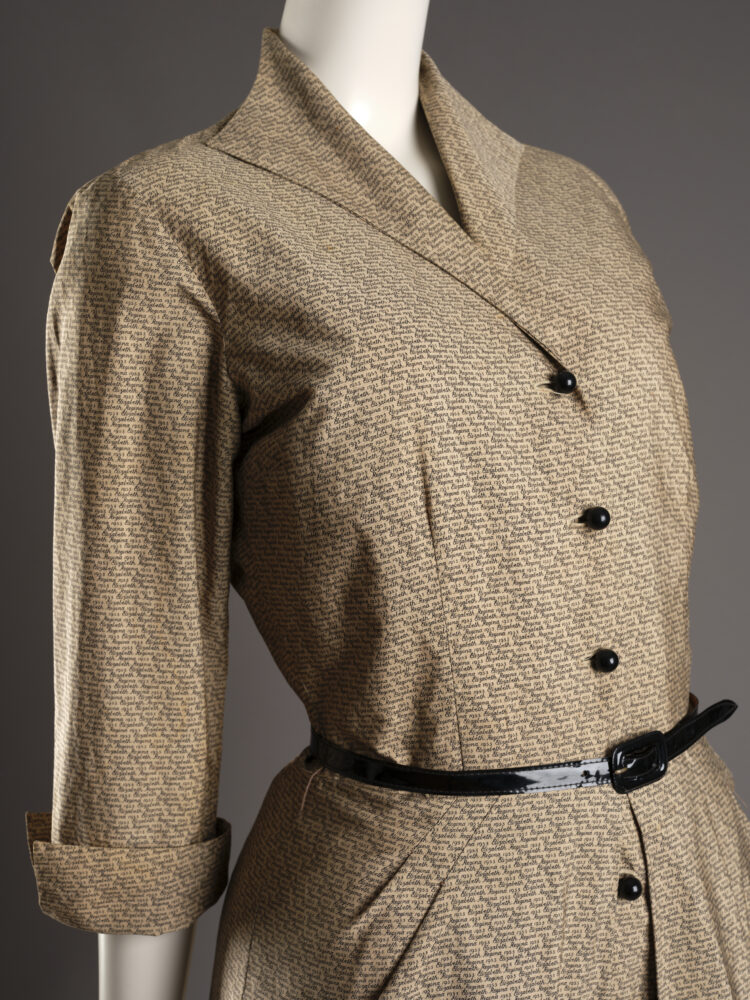
Cotton Coronation Commemoration Dress, Horrockses Fashion
Object Number: 2004.11
Margaret Meades trained at Manchester College of Art, where she later taught for many years, helping to nurture a new generation of designers. A member of the Society of Industrial Artists, she was also a successful textile designer for Horrockses Fashions. Her prolific output as a textile artist is reflected in the many surviving designs now held in the Glasgow Women’s Library. Margaret ran her own art studio before retiring to the Highlands of Scotland.
This Horrockses Fashions shirtwaister dress was created to commemorate the coronation of Queen Elizabeth II in 1953. Its textile design is composed of the handwritten words “Elizabeth Regina 1953,” repeated densely across the fabric.
While many commemorative textiles were produced to celebrate the coronation, often in the form of souvenir items such as tea towels, this design transforms a celebratory message into a refined repeating pattern, demonstrating how skilled textile designers could translate contemporary events into sophisticated fashion fabrics.
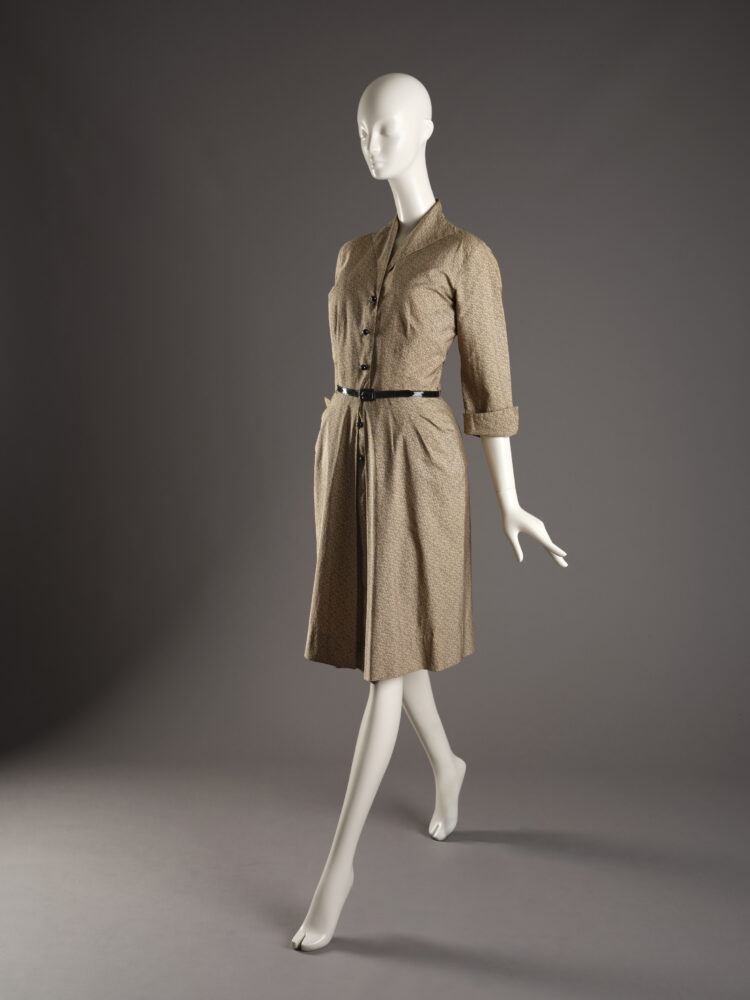
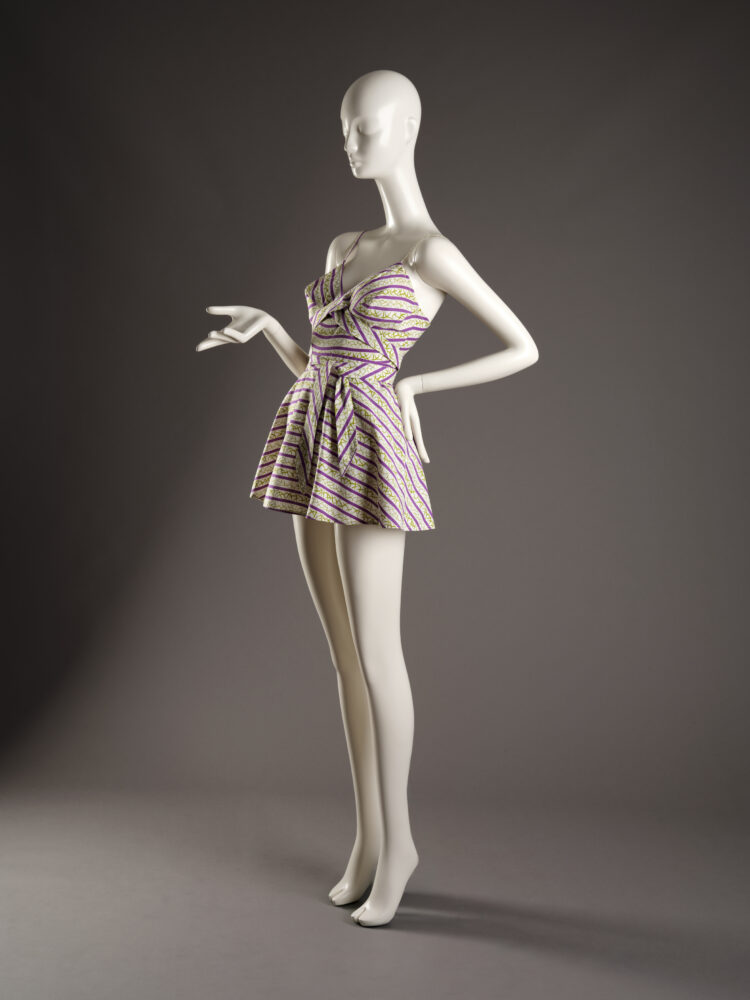
Sunsuit in a Printed Cotton Designed by Alastair Morton, Horrockses Fashions
Object Number: 2003.83
In the late 1940s, Horrockses Fashions sought innovative textile designs to define its distinctive look. In 1947 the company secured the talents of visionary artist and designer Alastair Morton on an annual retainer, commissioning at least forty designs each year. The grandson of a textile manufacturer, Morton combined a deep understanding of industry with the sensibility of an abstract painter. As director of Edinburgh Weavers, an experimental branch of the Morton Sundour textile company, he was already known for bold, modern interior fabrics.
For Horrockses, Morton created lively printed cottons characterised by free-flowing florals, organic abstractions, and dynamic colour combinations. Between the late 1940s and early 1950s he produced more than 400 designs, helping establish the visual identity of the brand.
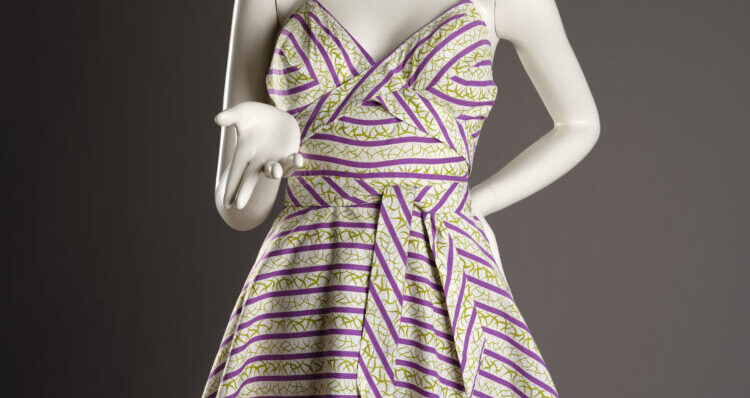
Sunsuit in a Printed Cotton Designed by Alastair Morton, Horrockses Fashions
Object Number: 2003.83
In the late 1940s, Horrockses Fashions sought innovative textile designs to define its distinctive look. In 1947 the company secured the talents of visionary artist and designer Alastair Morton on an annual retainer, commissioning at least forty designs each year. The grandson of a textile manufacturer, Morton combined a deep understanding of industry with the sensibility of an abstract painter. As director of Edinburgh Weavers, an experimental branch of the Morton Sundour textile company, he was already known for bold, modern interior fabrics.
For Horrockses, Morton created lively printed cottons characterised by free-flowing florals, organic abstractions, and dynamic colour combinations. Between the late 1940s and early 1950s he produced more than 400 designs, helping establish the visual identity of the brand.
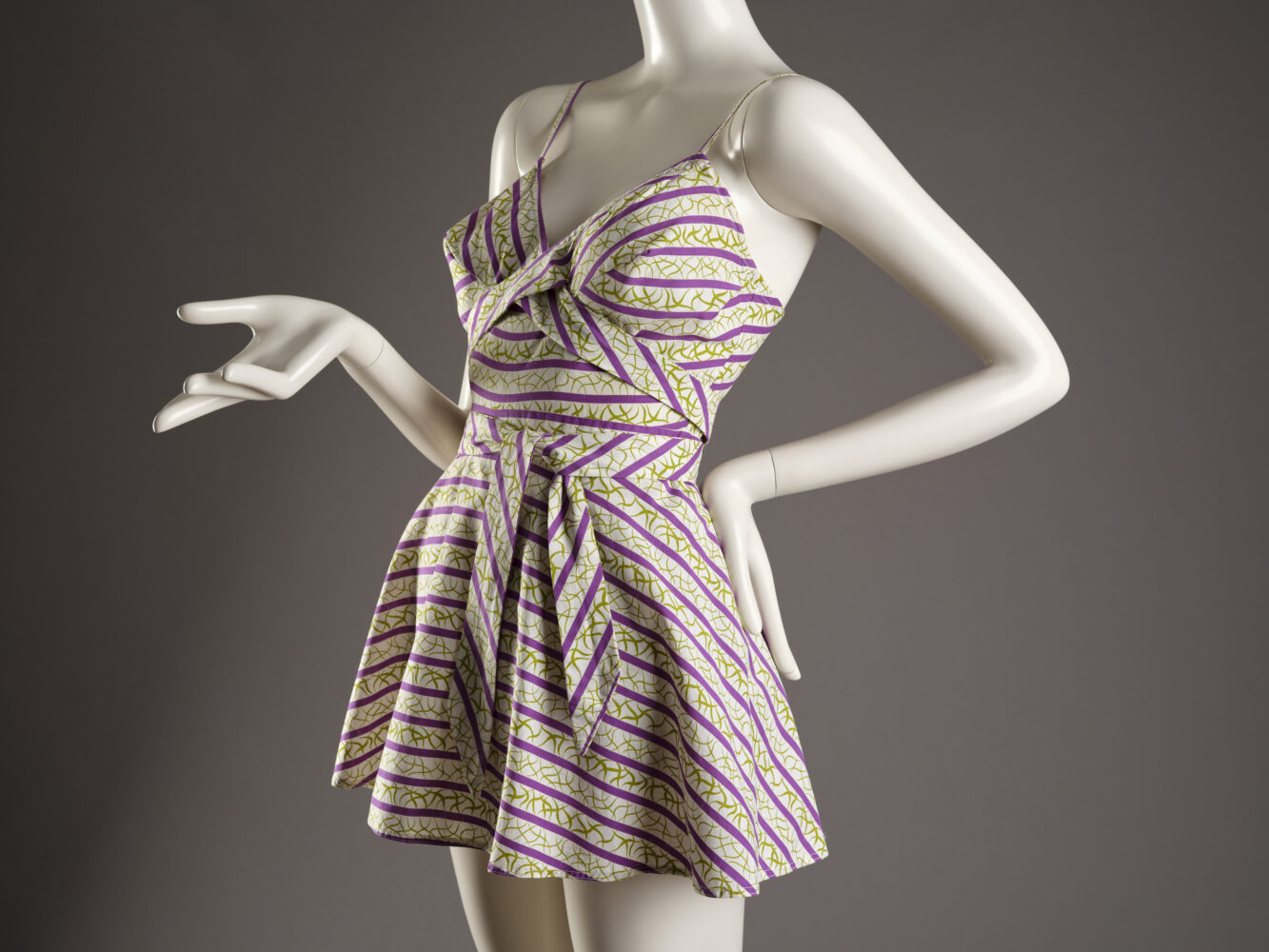
Sunsuit in a Printed Cotton Designed by Alastair Morton, Horrockses Fashions
Object Number: 2003.83
In the late 1940s, Horrockses Fashions sought innovative textile designs to define its distinctive look. In 1947 the company secured the talents of visionary artist and designer Alastair Morton on an annual retainer, commissioning at least forty designs each year. The grandson of a textile manufacturer, Morton combined a deep understanding of industry with the sensibility of an abstract painter. As director of Edinburgh Weavers, an experimental branch of the Morton Sundour textile company, he was already known for bold, modern interior fabrics.
For Horrockses, Morton created lively printed cottons characterised by free-flowing florals, organic abstractions, and dynamic colour combinations. Between the late 1940s and early 1950s he produced more than 400 designs, helping establish the visual identity of the brand.