Horrockses Fashions
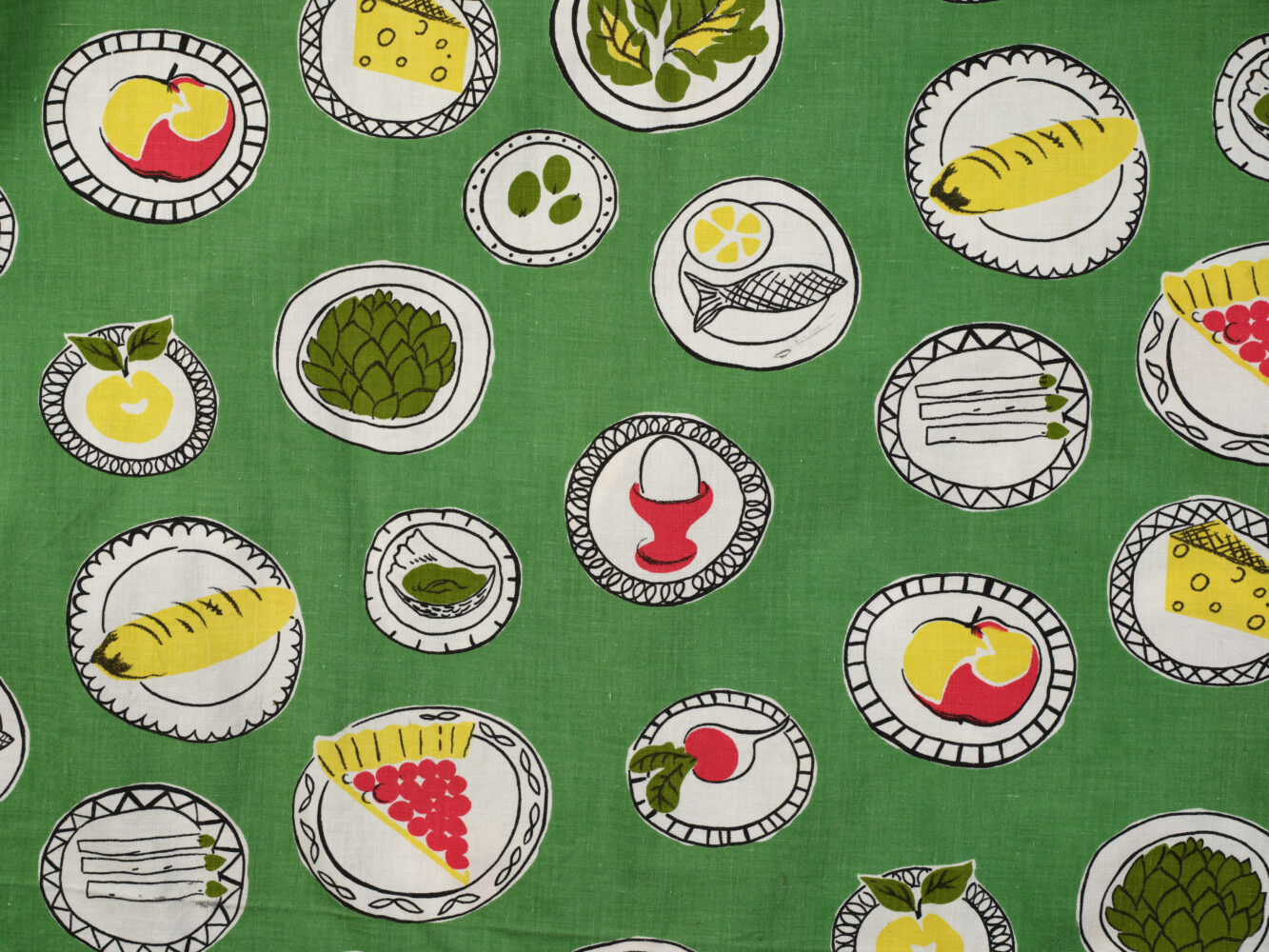
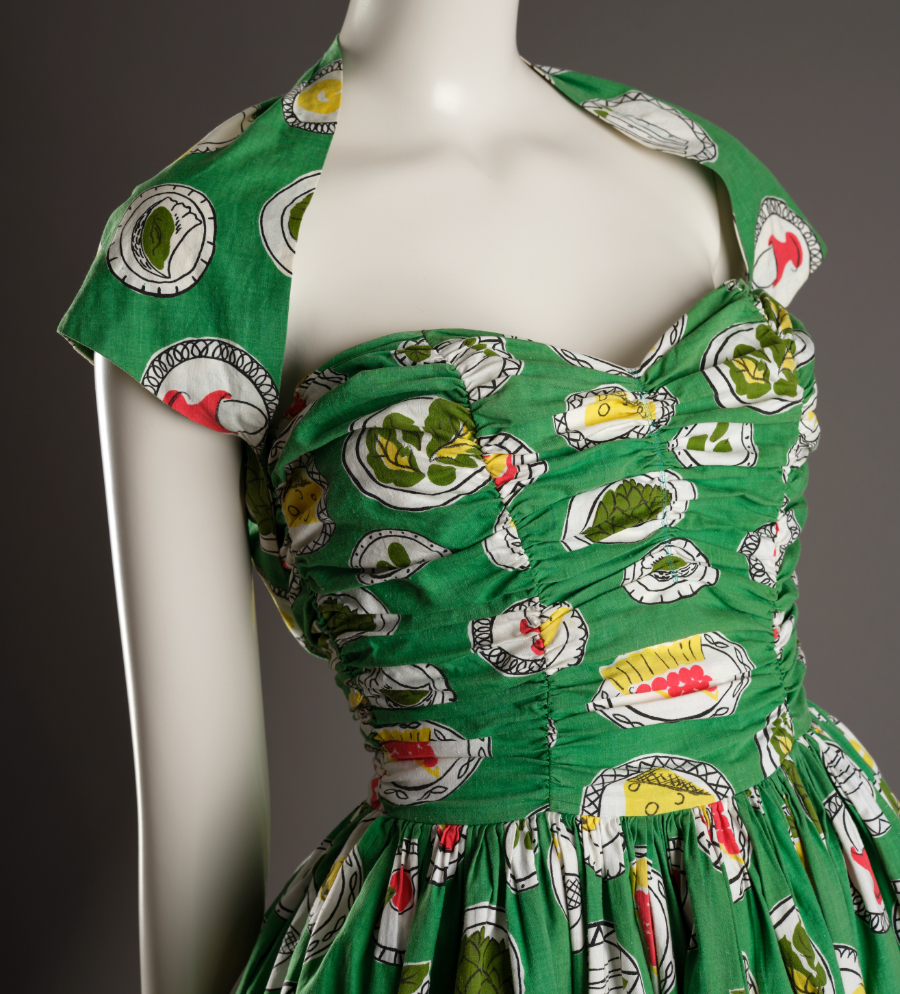
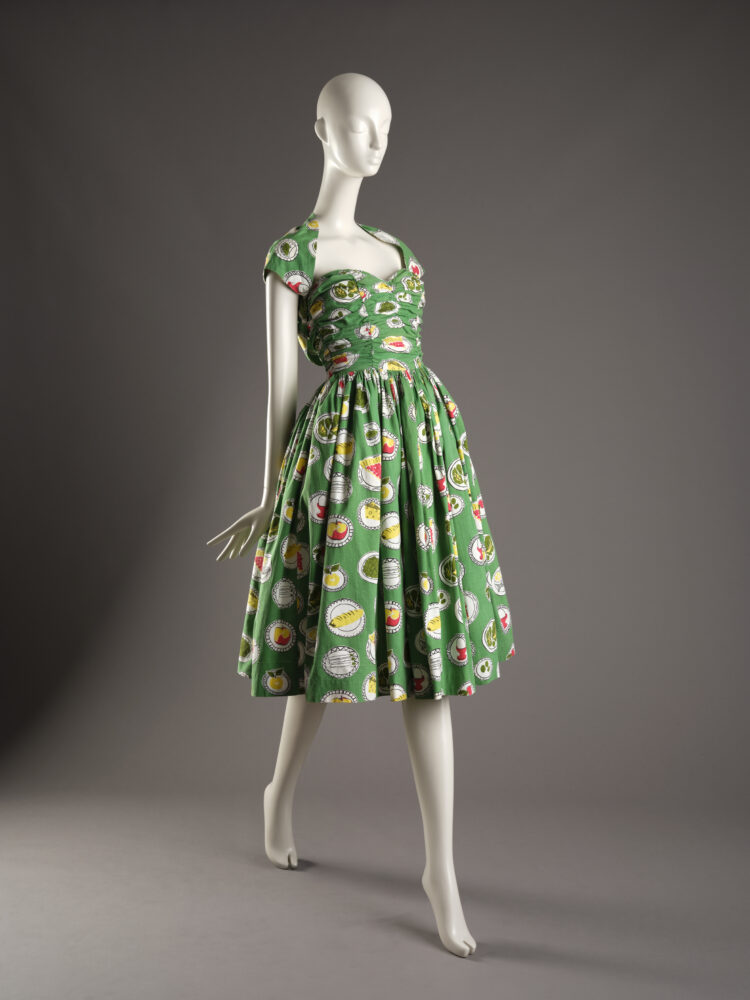
Cotton Sun Dress with Matching Sleeveless Bolero Jacket, Printed With Plates of Food Such as Cherry Pie, Apples and Asparagus, Horrockses Fashions
Object Number: 2001.37
Many of the Horrockses Fashions designs were based on flowers, but occasionally John Tullis, head designer, would request something more unusual. This dress with a fun food print was worn in the early 1950s, at a time when food rationing was still in place in Britain. The types of food illustrated include asparagus, quiche and artichoke, all of which must have appeared very exotic to people living off wartime rations which did not end completely until 1954.
Cotton Sun Dress with Matching Sleeveless Bolero Jacket, Printed With Plates of Food Such as Cherry Pie, Apples and Asparagus, Horrockses Fashions
Object Number: 2001.37
Many of the Horrockses Fashions designs were based on flowers, but occasionally John Tullis, head designer, would request something more unusual. This dress with a fun food print was worn in the early 1950s, at a time when food rationing was still in place in Britain. The types of food illustrated include asparagus, quiche and artichoke, all of which must have appeared very exotic to people living off wartime rations which did not end completely until 1954.
Cotton Sun Dress with Matching Sleeveless Bolero Jacket, Printed With Plates of Food Such as Cherry Pie, Apples and Asparagus, Horrockses Fashions
Object Number: 2001.37
Many of the Horrockses Fashions designs were based on flowers, but occasionally John Tullis, head designer, would request something more unusual. This dress with a fun food print was worn in the early 1950s, at a time when food rationing was still in place in Britain. The types of food illustrated include asparagus, quiche and artichoke, all of which must have appeared very exotic to people living off wartime rations which did not end completely until 1954.
Yellow and Black Cotton Cocktail Dress in a Print by Eduardo Paolozzi, Horrockses Fashions
Object Number: 2003.81
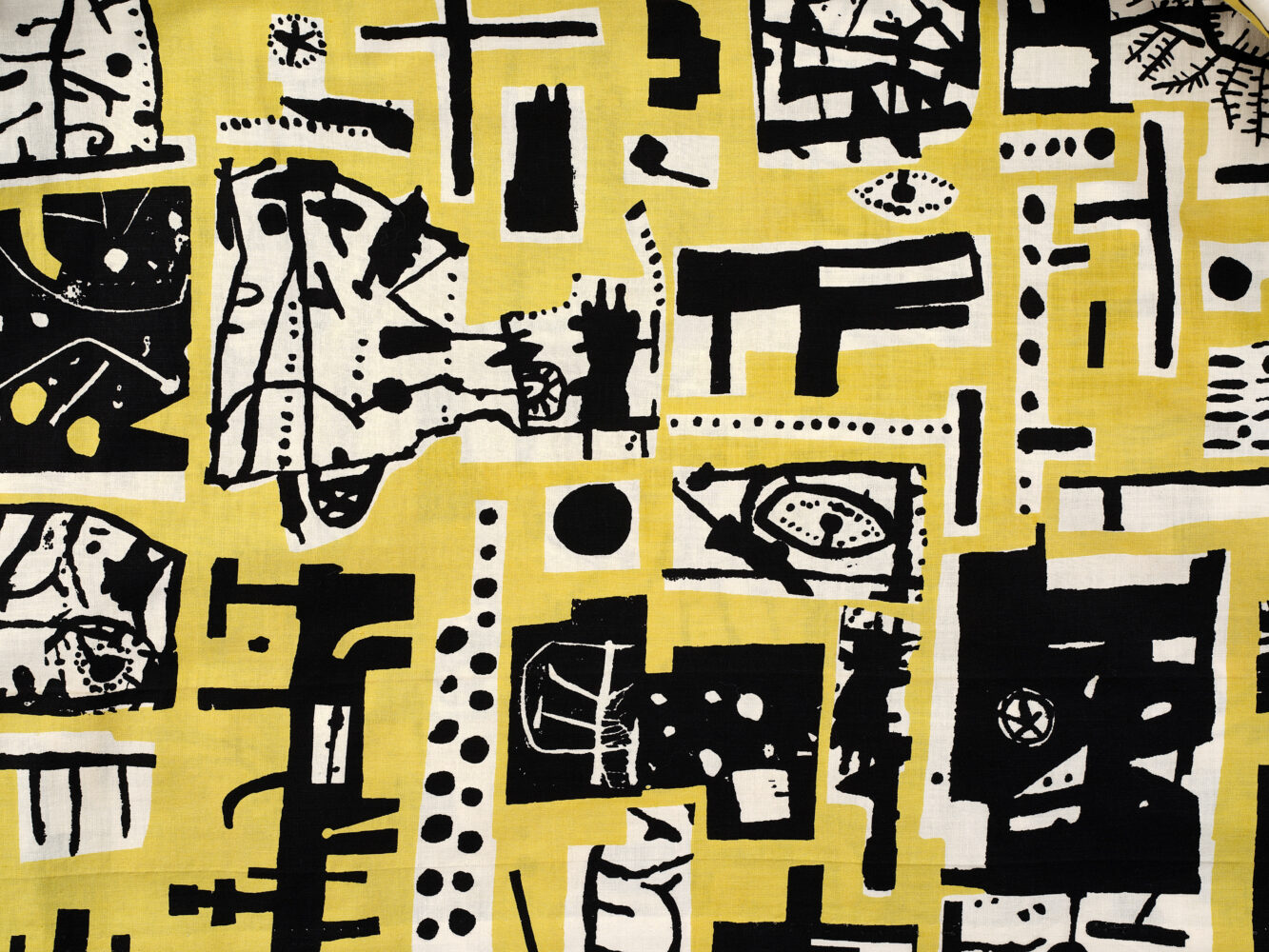
In the early 1950s, designers and manufacturers increasingly explored closer relationships between fine art and textile design. A key moment in this movement was the 1953 exhibition Painting into Textiles at the Institute of Contemporary Arts in London. The exhibition brought together contemporary artists and textile designers, encouraging paintings to be reimagined as modern fabrics.
Horrockses Fashions purchased a painting by Scottish born artist Eduardo Paolozzi from the exhibition and transformed it into a bold screen-printed cotton dress. Paolozzi, a pioneer of Pop Art, drew inspiration from advertising, mass media and everyday imagery, often working across sculpture, collage, printmaking, and design.
The resulting Horrockses cocktail dress translates Paolozzi’s abstract imagery into a striking textile of yellow, black and white forms. By adapting avant-garde painting into wearable fashion, Horrockses helped bring contemporary art into everyday life, demonstrating how modern textiles could act as a bridge between gallery and wardrobe.
Yellow and Black Cotton Cocktail Dress in a Print by Eduardo Paolozzi, Horrockses Fashions
Object Number: 2003.81
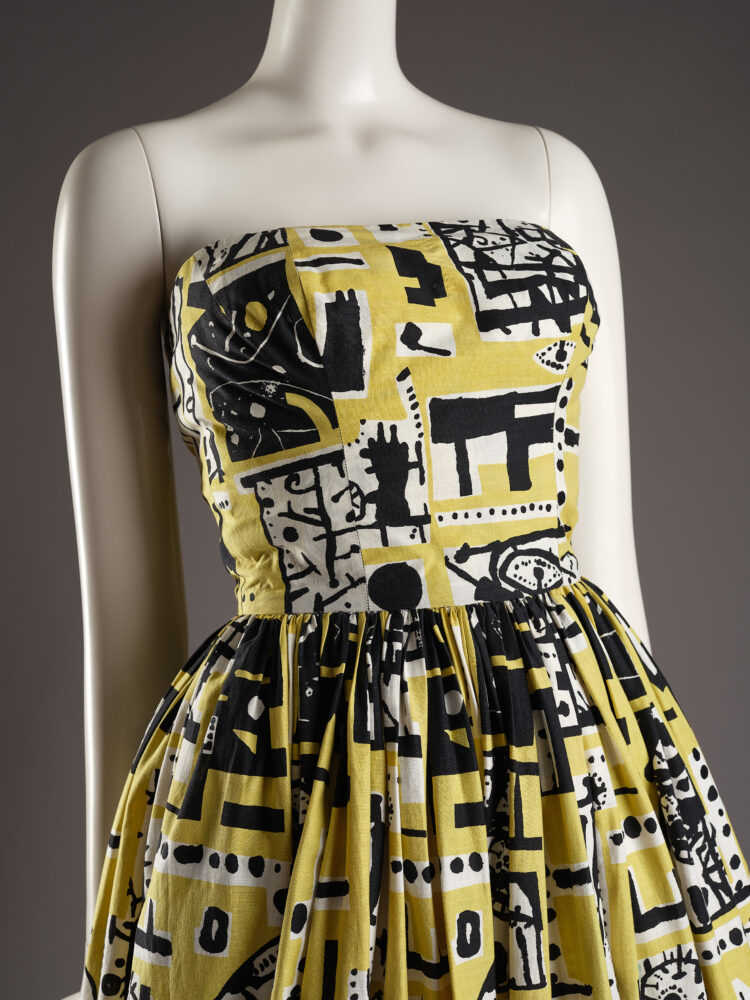
In the early 1950s, designers and manufacturers increasingly explored closer relationships between fine art and textile design. A key moment in this movement was the 1953 exhibition Painting into Textiles at the Institute of Contemporary Arts in London. The exhibition brought together contemporary artists and textile designers, encouraging paintings to be reimagined as modern fabrics.
Horrockses Fashions purchased a painting by Scottish born artist Eduardo Paolozzi from the exhibition and transformed it into a bold screen-printed cotton dress. Paolozzi, a pioneer of Pop Art, drew inspiration from advertising, mass media and everyday imagery, often working across sculpture, collage, printmaking, and design.
The resulting Horrockses cocktail dress translates Paolozzi’s abstract imagery into a striking textile of yellow, black and white forms. By adapting avant-garde painting into wearable fashion, Horrockses helped bring contemporary art into everyday life, demonstrating how modern textiles could act as a bridge between gallery and wardrobe.
Yellow and Black Cotton Cocktail Dress in a Print by Eduardo Paolozzi, Horrockses Fashions
Object Number: 2003.81
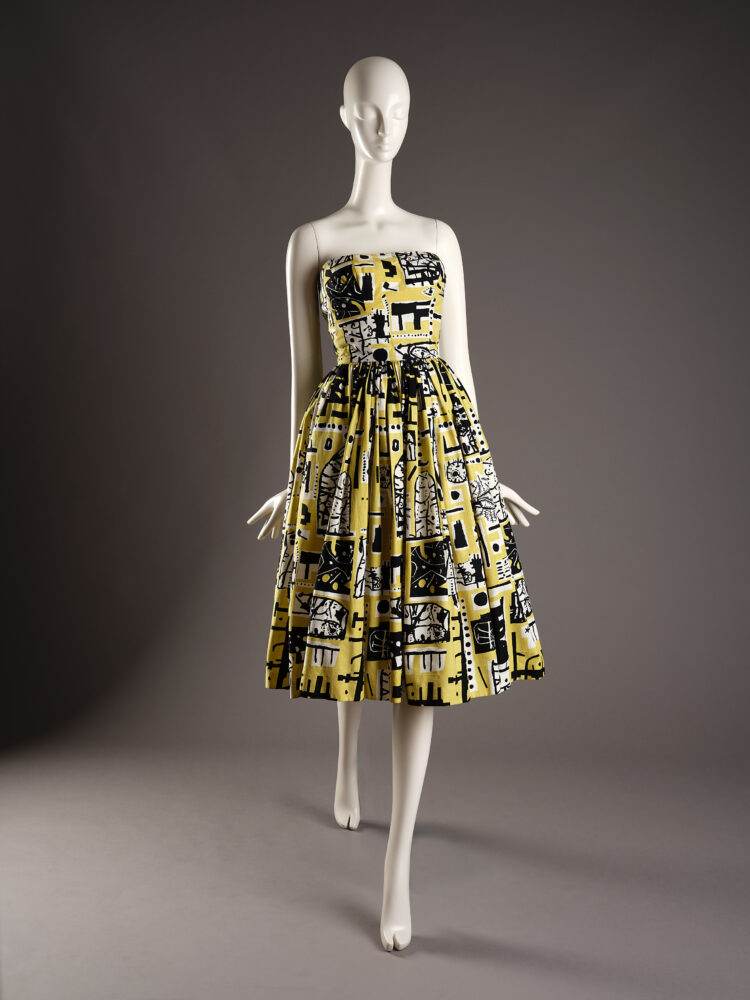
In the early 1950s, designers and manufacturers increasingly explored closer relationships between fine art and textile design. A key moment in this movement was the 1953 exhibition Painting into Textiles at the Institute of Contemporary Arts in London. The exhibition brought together contemporary artists and textile designers, encouraging paintings to be reimagined as modern fabrics.
Horrockses Fashions purchased a painting by Scottish born artist Eduardo Paolozzi from the exhibition and transformed it into a bold screen-printed cotton dress. Paolozzi, a pioneer of Pop Art, drew inspiration from advertising, mass media and everyday imagery, often working across sculpture, collage, printmaking, and design.
The resulting Horrockses cocktail dress translates Paolozzi’s abstract imagery into a striking textile of yellow, black and white forms. By adapting avant-garde painting into wearable fashion, Horrockses helped bring contemporary art into everyday life, demonstrating how modern textiles could act as a bridge between gallery and wardrobe.
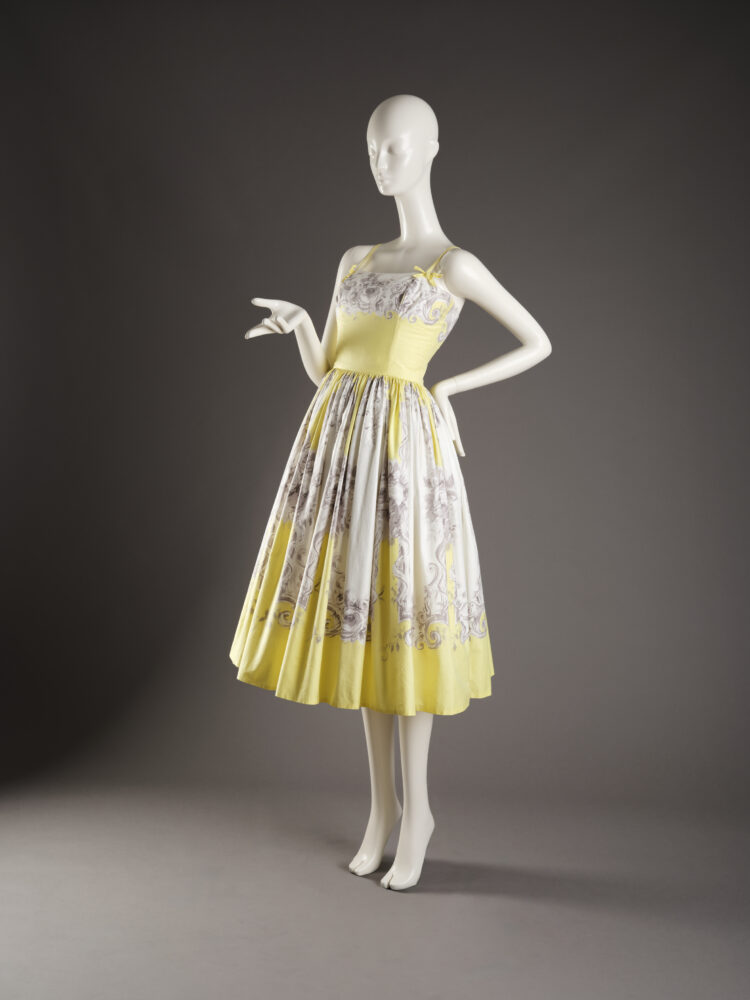
Cotton Summer Dress with Yellow Roses, Horrockses Fashions
Object Number: 2001.36
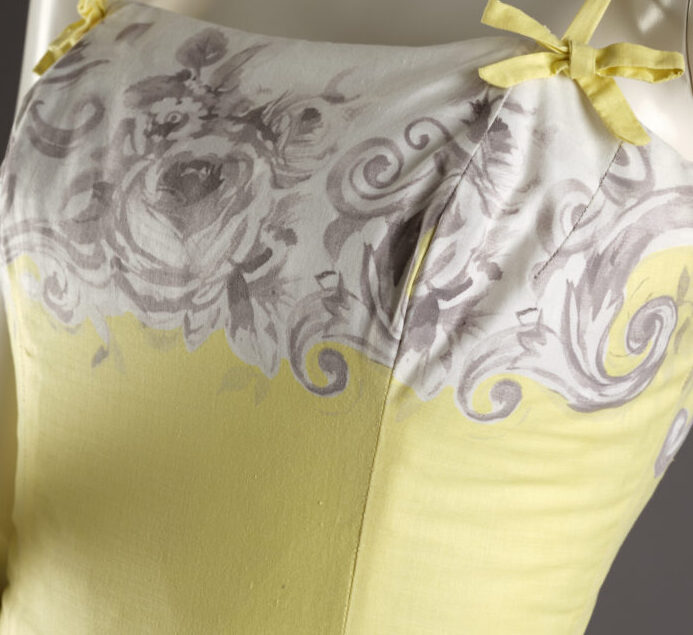
Donated by Mrs Marjorie Pollard from Preston, the donor worked for Horrockses, in the offices and bought the dress from the factory shop when she was around 18 years old. Employees were permitted to purchase one a year at a discounted price. Marjorie bought the dress specifically to wear during the hot summer months and often wore it at weekends, to dances and trips to Blackpool.
Cotton Summer Dress with Yellow Roses, Horrockses Fashions
Object Number: 2001.36
Donated by Mrs Marjorie Pollard from Preston, the donor worked for Horrockses, in the offices and bought the dress from the factory shop when she was around 18 years old. Employees were permitted to purchase one a year at a discounted price. Marjorie bought the dress specifically to wear during the hot summer months and often wore it at weekends, to dances and trips to Blackpool.
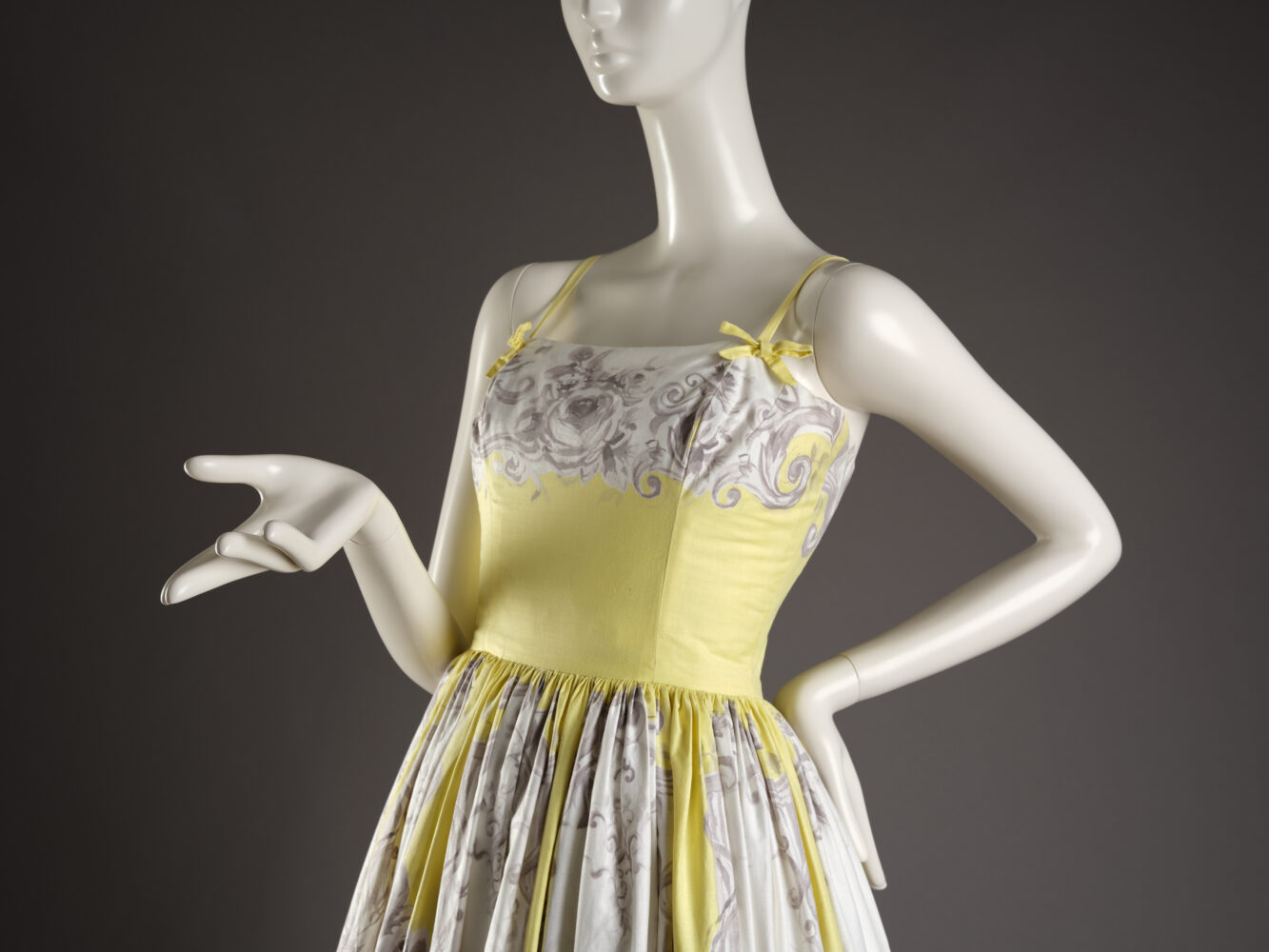
Cotton Summer Dress with Yellow Roses, Horrockses Fashions
Object Number: 2001.36
Donated by Mrs Marjorie Pollard from Preston, the donor worked for Horrockses, in the offices and bought the dress from the factory shop when she was around 18 years old. Employees were permitted to purchase one a year at a discounted price. Marjorie bought the dress specifically to wear during the hot summer months and often wore it at weekends, to dances and trips to Blackpool.