Horrockses Fashions
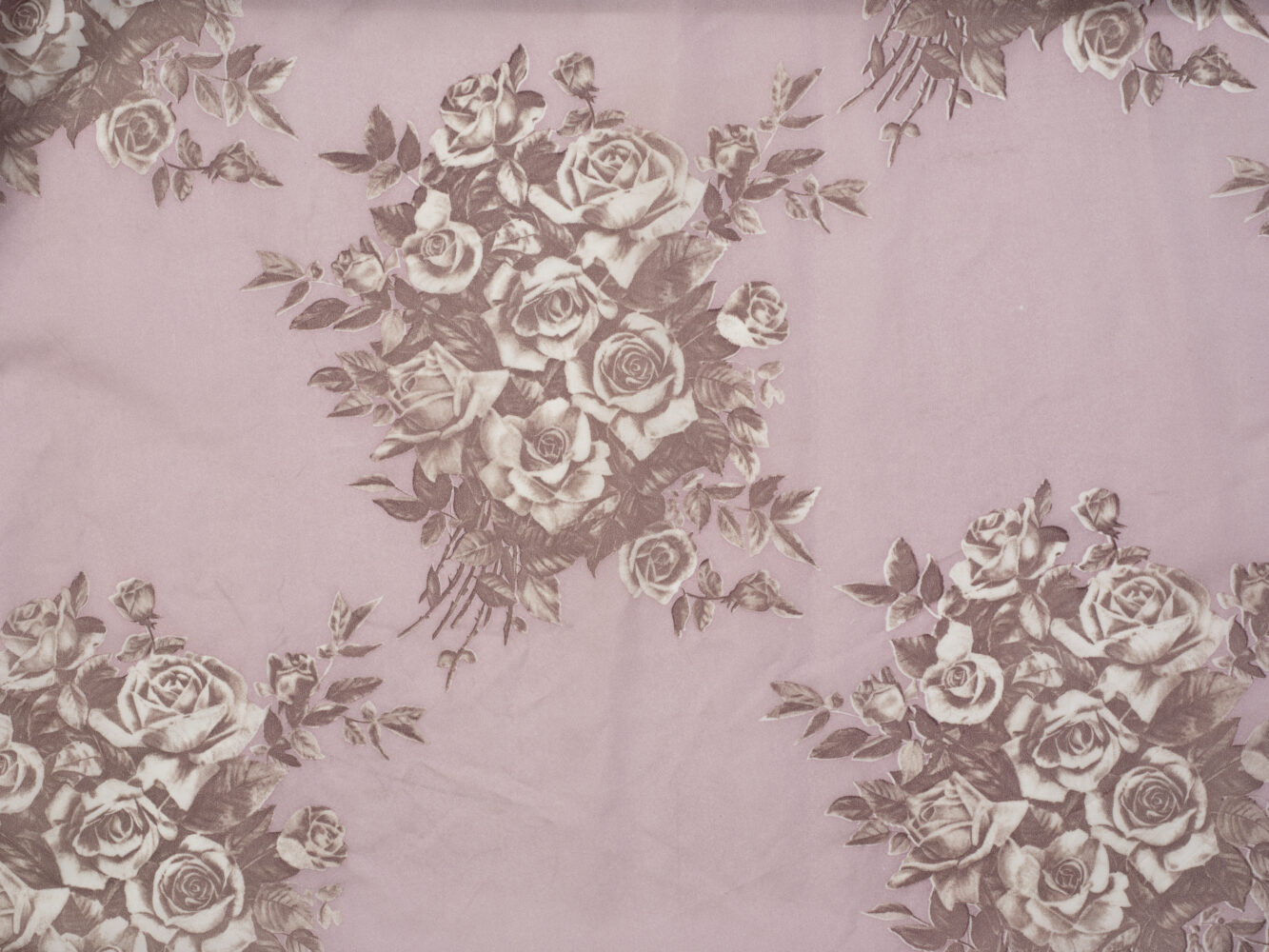
Cocktail Dress in a Sekers’ Nylon, Transfer Printed with a Design of Roses, Horrockses Fashions
Object Number: 2001.35
Donated by Mrs. E Male from Preston, Mrs Male’s husband ran the Horrockses department that supplied the fabric for Horrockses Fashions. He would often go down to London for their seasonal fashion shows.
Made form Sekers nylon, Horrockses Fashions benefited directly from émigré design and manufacturing talent, sourcing silks and synthetic fabrics from Sekers (West Cumberland Silk Mills), including high-quality satins and gauzes. The company was founded in 1938 by Hungarian émigré textile designer and manufacturer Nicholas ‘Miki’ Sekers in Whitehaven, Cumbria.
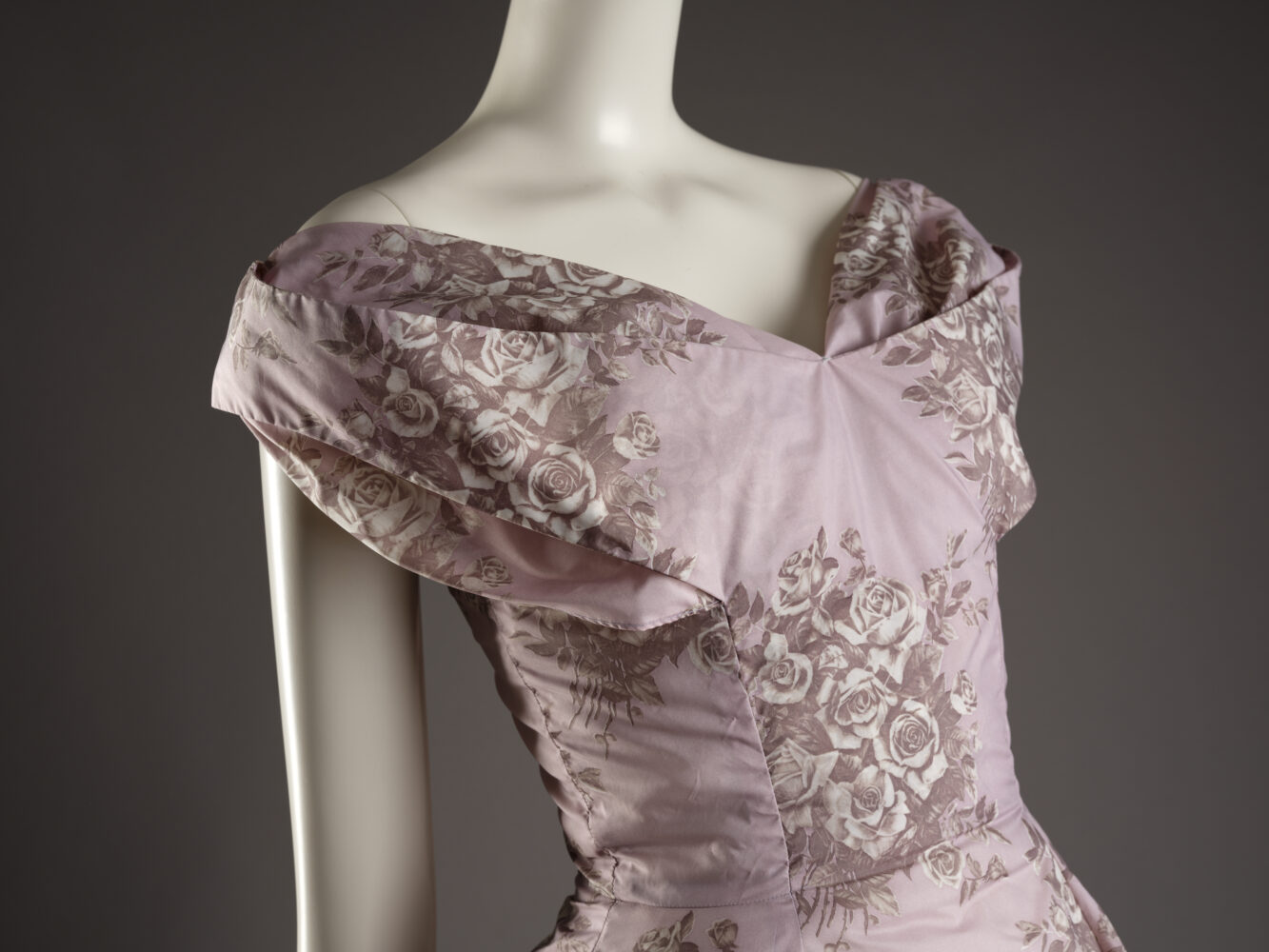
Cocktail Dress in a Sekers’ Nylon, Transfer Printed with a Design of Roses, Horrockses Fashions
Object Number: 2001.35
Donated by Mrs. E Male from Preston, Mrs Male’s husband ran the Horrockses department that supplied the fabric for Horrockses Fashions. He would often go down to London for their seasonal fashion shows.
Made form Sekers nylon, Horrockses Fashions benefited directly from émigré design and manufacturing talent, sourcing silks and synthetic fabrics from Sekers (West Cumberland Silk Mills), including high-quality satins and gauzes. The company was founded in 1938 by Hungarian émigré textile designer and manufacturer Nicholas ‘Miki’ Sekers in Whitehaven, Cumbria.
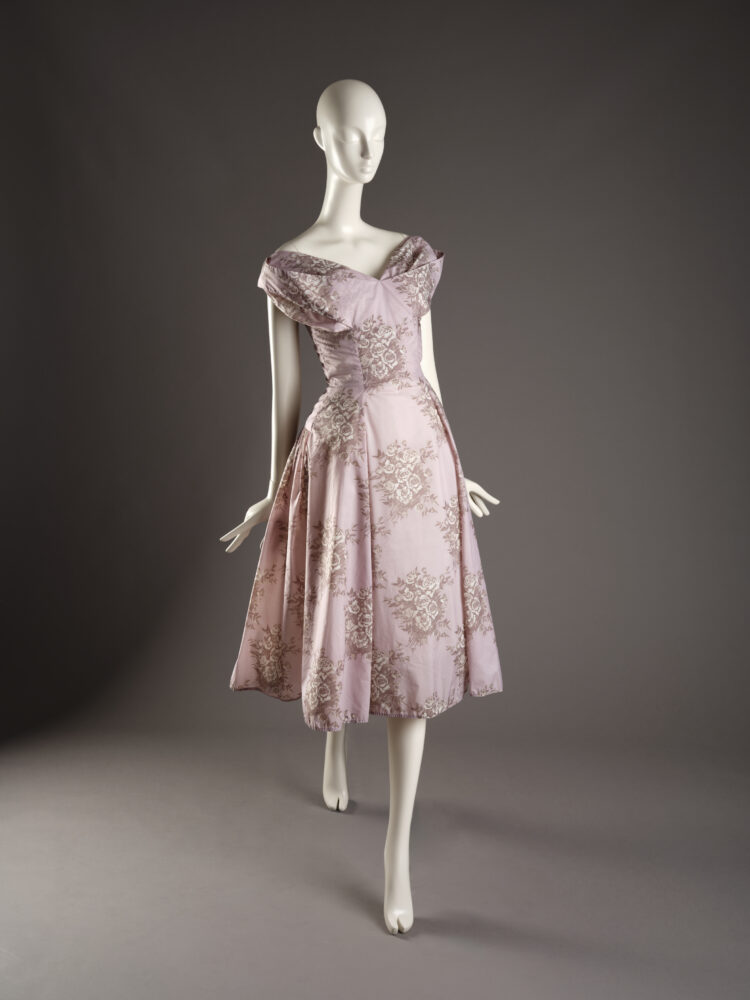
Cocktail Dress in a Sekers’ Nylon, Transfer Printed with a Design of Roses, Horrockses Fashions
Object Number: 2001.35
Donated by Mrs. E Male from Preston, Mrs Male’s husband ran the Horrockses department that supplied the fabric for Horrockses Fashions. He would often go down to London for their seasonal fashion shows.
Made form Sekers nylon, Horrockses Fashions benefited directly from émigré design and manufacturing talent, sourcing silks and synthetic fabrics from Sekers (West Cumberland Silk Mills), including high-quality satins and gauzes. The company was founded in 1938 by Hungarian émigré textile designer and manufacturer Nicholas ‘Miki’ Sekers in Whitehaven, Cumbria.
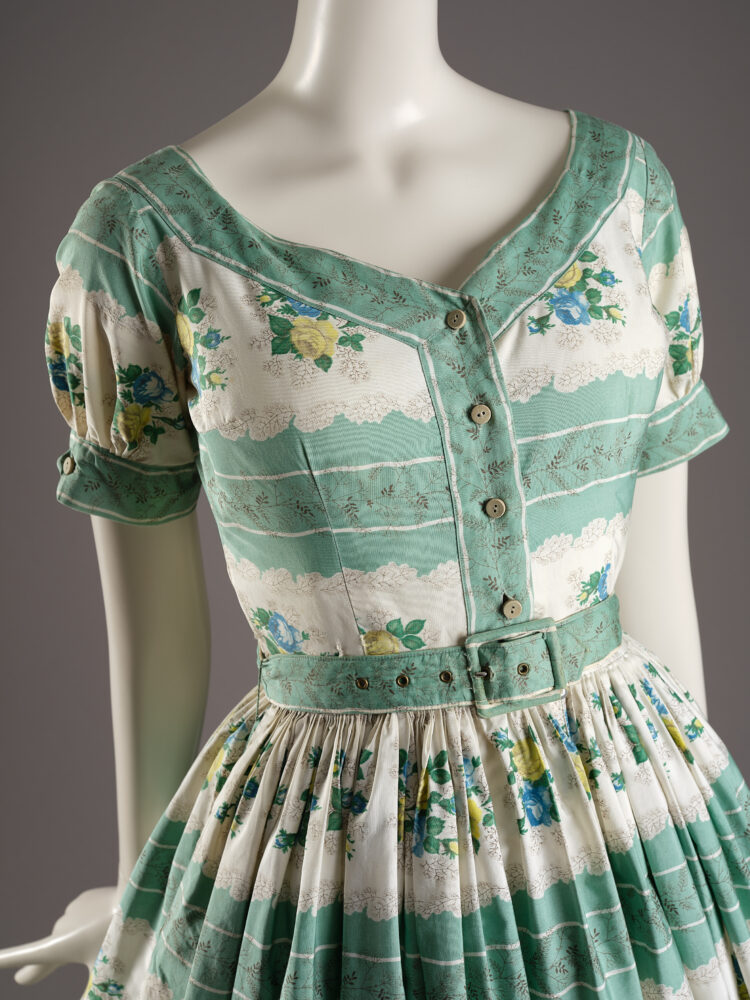
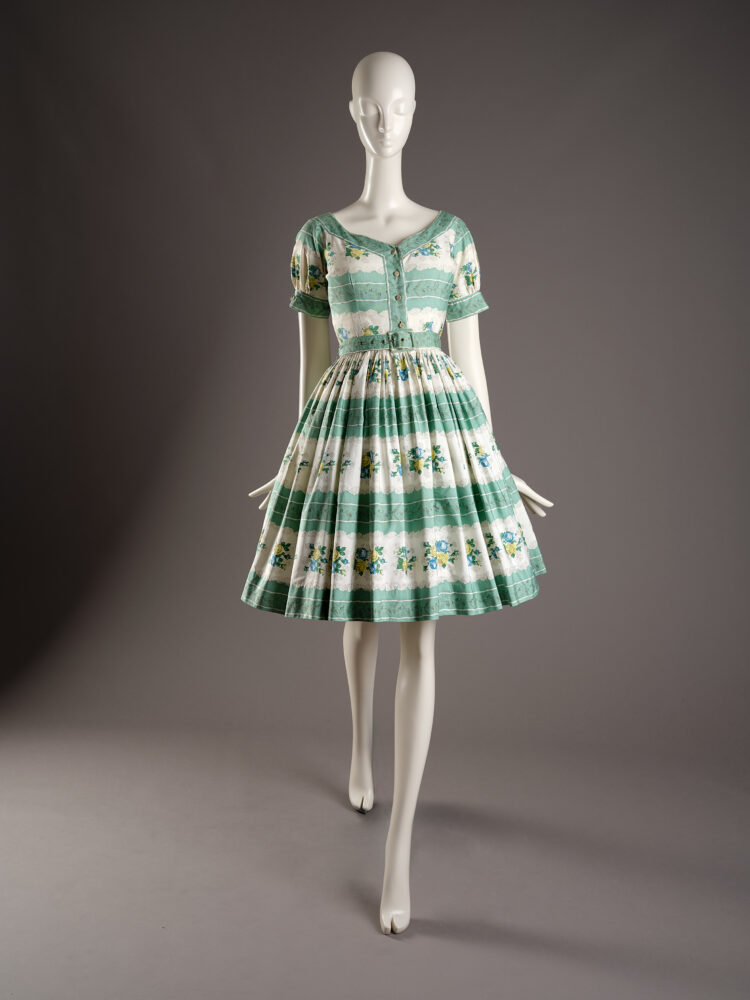
Cotton Sun Dress with Bands of Green and White and Printed Floral Pattern, Horrockses Fashions
Object Number: 2000.302
This dress belonged to Miss Greta Hetherington from Preston. Greta bought the dress in 1954 from a shop in Queen Street Blackpool and remembered paying between £8-9 for it. She wore the dress during her summer holidays.
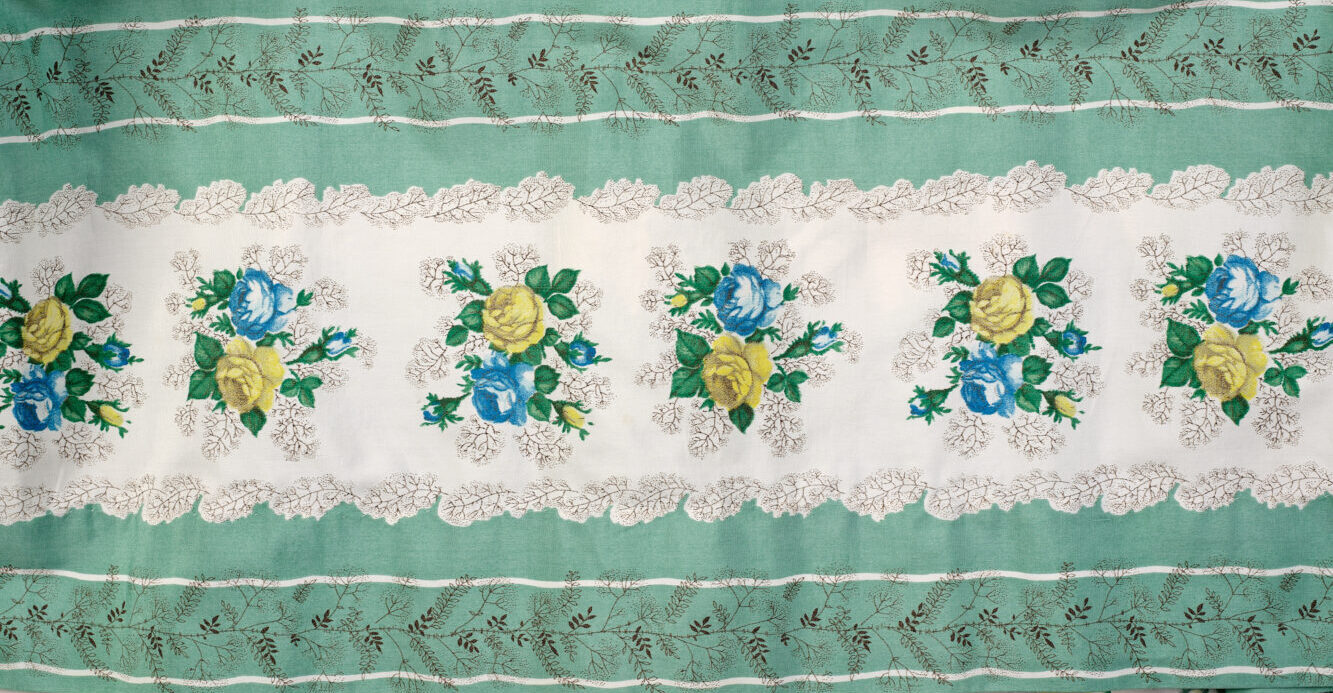
The floral pattern on this printed cotton dress was designed for Horrockses Fashions by Alastair Morton. Morton was a famous textile designer of the mid-1900s. Flowers set within bands of colour were a speciality of his. Here the swags of blue and yellow roses have a painted effect, while the leaf pattern against the mint stripe is incredibly fine. This pattern has been roller printed onto cotton running vertically through the printing machine. The dress has then been cut with the stripes running horizontally across the garment. The fabric joins are barely visible and it is this attention to styling a fabric that gave Horrockses Fashions their reputation.
Cotton Sun Dress with Bands of Green and White and Printed Floral Pattern, Horrockses Fashions
Object Number: 2000.302
This dress belonged to Miss Greta Hetherington from Preston. Greta bought the dress in 1954 from a shop in Queen Street Blackpool and remembered paying between £8-9 for it. She wore the dress during her summer holidays.
The floral pattern on this printed cotton dress was designed for Horrockses Fashions by Alastair Morton. Morton was a famous textile designer of the mid-1900s. Flowers set within bands of colour were a speciality of his. Here the swags of blue and yellow roses have a painted effect, while the leaf pattern against the mint stripe is incredibly fine. This pattern has been roller printed onto cotton running vertically through the printing machine. The dress has then been cut with the stripes running horizontally across the garment. The fabric joins are barely visible and it is this attention to styling a fabric that gave Horrockses Fashions their reputation.
Cotton Sun Dress with Bands of Green and White and Printed Floral Pattern, Horrockses Fashions
Object Number: 2000.302
This dress belonged to Miss Greta Hetherington from Preston. Greta bought the dress in 1954 from a shop in Queen Street Blackpool and remembered paying between £8-9 for it. She wore the dress during her summer holidays.
The floral pattern on this printed cotton dress was designed for Horrockses Fashions by Alastair Morton. Morton was a famous textile designer of the mid-1900s. Flowers set within bands of colour were a speciality of his. Here the swags of blue and yellow roses have a painted effect, while the leaf pattern against the mint stripe is incredibly fine. This pattern has been roller printed onto cotton running vertically through the printing machine. The dress has then been cut with the stripes running horizontally across the garment. The fabric joins are barely visible and it is this attention to styling a fabric that gave Horrockses Fashions their reputation.
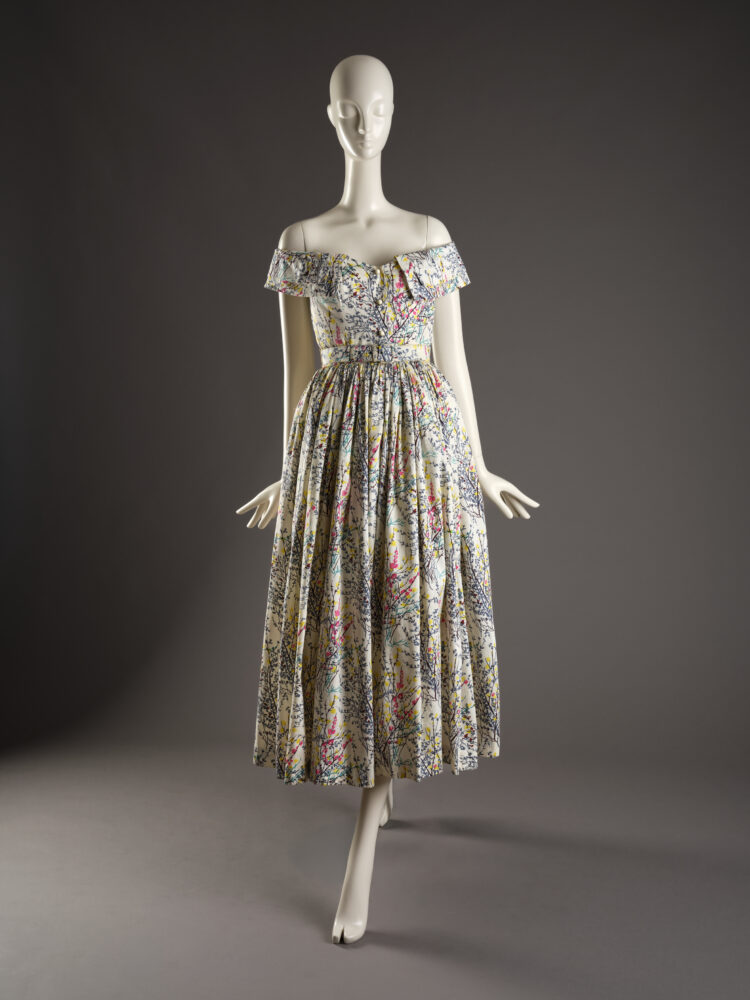
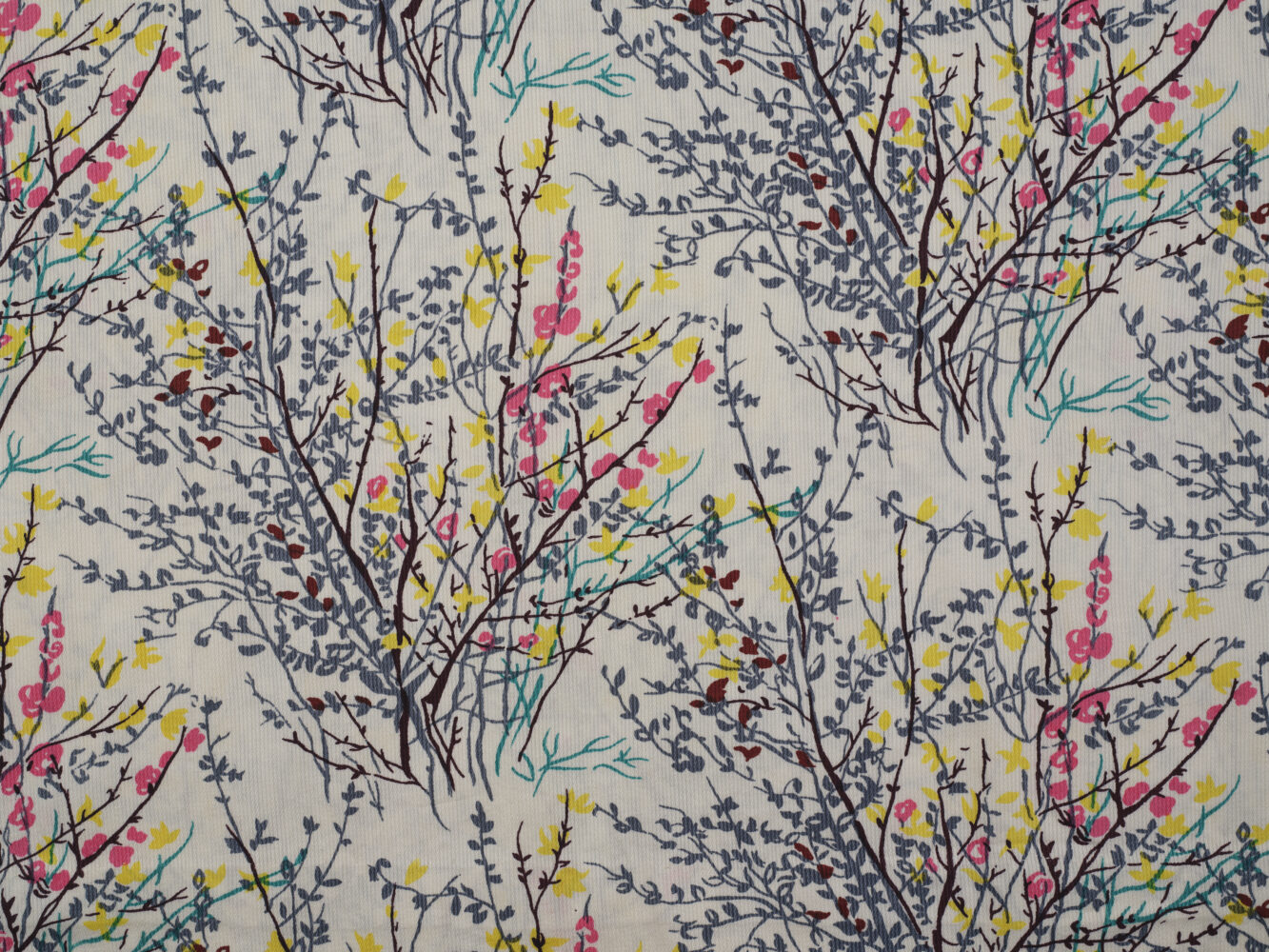
Evening Dress in Corded Cotton with a Printed Design by Joyce Badrocke, Horrockses Fashions
Object Number: 1999.562.2
Joyce Badrocke was among a new generation of textile designers who shaped British fashion in the early 1950s. After studying at Worthing Art School, she won an Exhibition Scholarship to the Royal College of Art in 1947 and later an Industrial Art Bursary from the Royal Society of Arts (RCA). She graduated from the RCA in 1950 and soon after joined Horrockses Fashions as an in-house designer, her talent recognised at her RCA diploma show. Nature was central to Badrocke’s design thinking. By transforming these observations into repeating patterns, Badrocke created textiles that captured both the beauty of nature and the modern spirit of post-war design.
Badrocke’s textiles ranged from bold geometric compositions to painterly florals, irregular stripes, checks and lively abstract motifs.
Evening Dress in Corded Cotton with a Printed Design by Joyce Badrocke, Horrockses Fashions
Object Number: 1999.562.2
Joyce Badrocke was among a new generation of textile designers who shaped British fashion in the early 1950s. After studying at Worthing Art School, she won an Exhibition Scholarship to the Royal College of Art in 1947 and later an Industrial Art Bursary from the Royal Society of Arts (RCA). She graduated from the RCA in 1950 and soon after joined Horrockses Fashions as an in-house designer, her talent recognised at her RCA diploma show. Nature was central to Badrocke’s design thinking. By transforming these observations into repeating patterns, Badrocke created textiles that captured both the beauty of nature and the modern spirit of post-war design.
Badrocke’s textiles ranged from bold geometric compositions to painterly florals, irregular stripes, checks and lively abstract motifs.
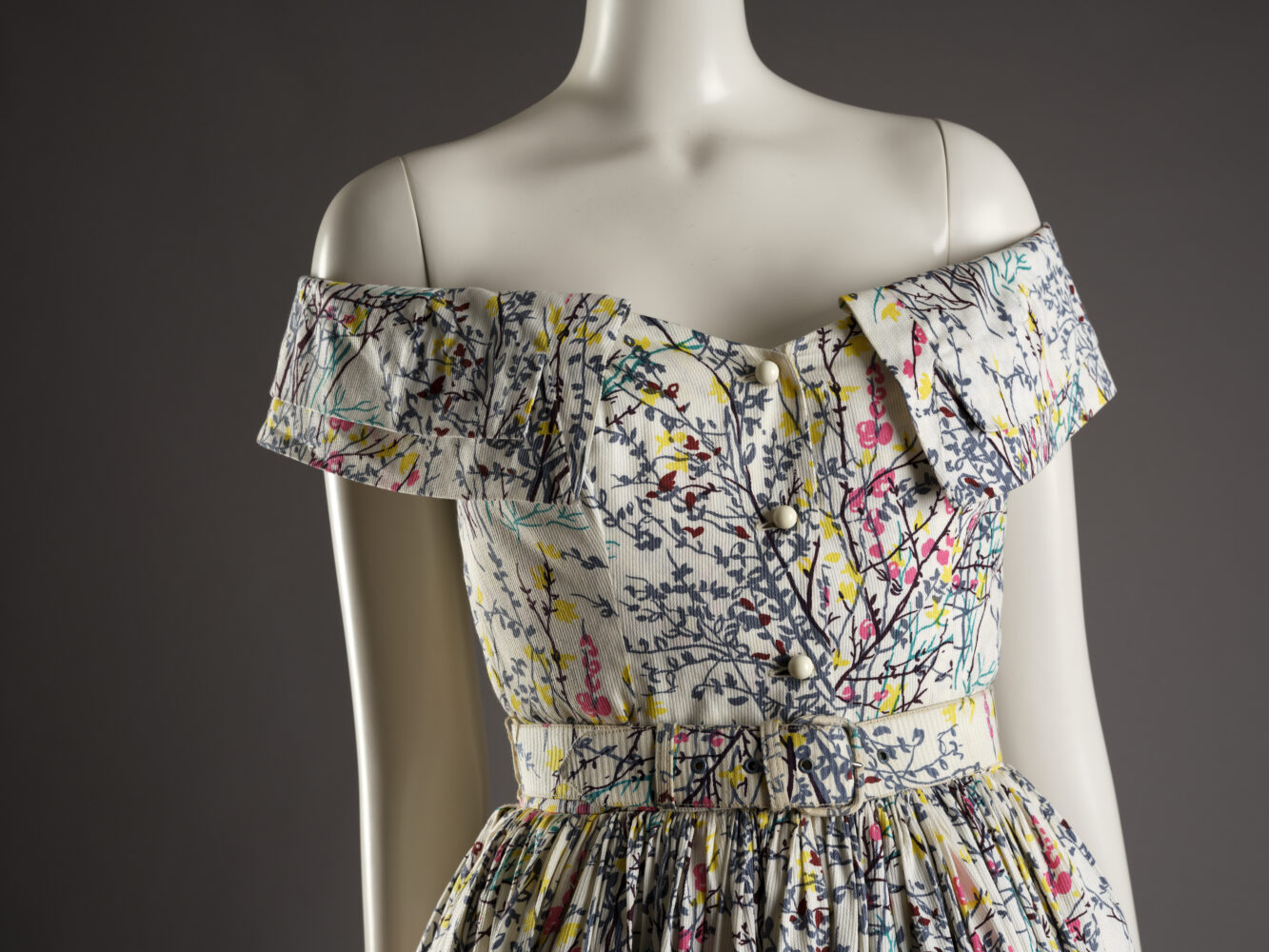
Evening Dress in Corded Cotton with a Printed Design by Joyce Badrocke, Horrockses Fashions
Object Number: 1999.562.2
Joyce Badrocke was among a new generation of textile designers who shaped British fashion in the early 1950s. After studying at Worthing Art School, she won an Exhibition Scholarship to the Royal College of Art in 1947 and later an Industrial Art Bursary from the Royal Society of Arts (RCA). She graduated from the RCA in 1950 and soon after joined Horrockses Fashions as an in-house designer, her talent recognised at her RCA diploma show. Nature was central to Badrocke’s design thinking. By transforming these observations into repeating patterns, Badrocke created textiles that captured both the beauty of nature and the modern spirit of post-war design.
Badrocke’s textiles ranged from bold geometric compositions to painterly florals, irregular stripes, checks and lively abstract motifs.