
Two New Bronze Sculptures of Historic Preston Figures to be Presented to The Harris
Two new bronze sculptures depicting influential figures from Preston’s history will be officially presented to The Harris this April.
The sculptures of suffragette Edith Rigby and industrialist Sir. Richard Arkwright will become part of The Harris’ collection.
The works were created by Preston-born sculptor Peter Hodgkinson and generously funded by local businessman Wilf Boardman. They will anchor the complex stories that surround these two individuals in The Harris so that visitors can consider their legacy within Preston’s local story and wider national history.
The sculptures will go on display in the Discover Preston Gallery following their official presentation.
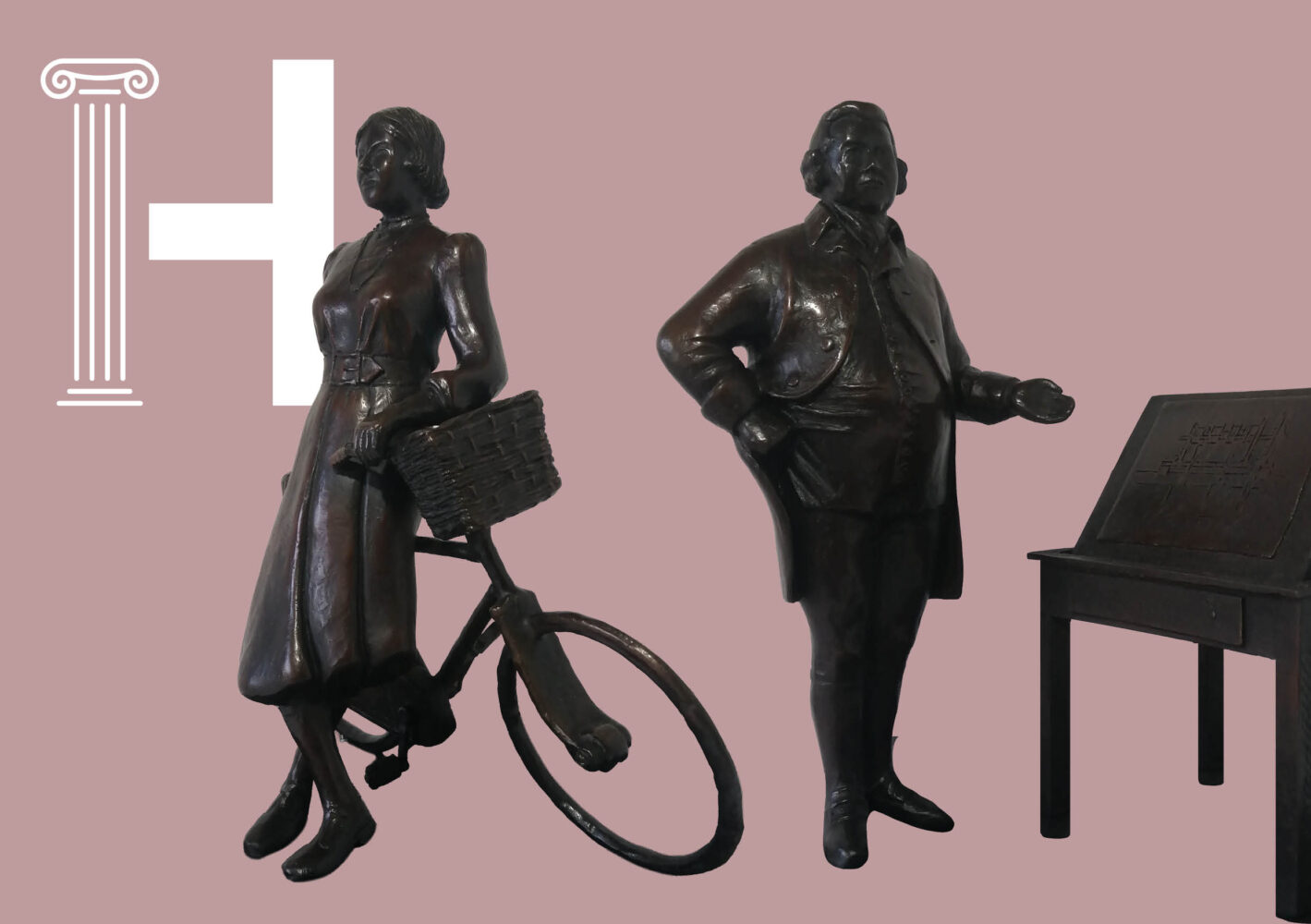
Born in Preston, Edith Rigby founded the Preston branch of the Women’s Social and Political Union, more commonly known as the suffragettes. She always looked for ways to improve the lives of local women her activism helped to advance the cause of women’s suffrage in the early twentieth century.
Rigby didn’t shy away from carrying out attacks on property to achieve her aims. She planted a bomb in the Liverpool Cotton Exchange and burnt down Sir William Lever’s holiday bungalow at Rivington. She also took the blame for tarring and feathering the Earl of Derby statue in Miller Park to protect the identity of the mystery culprit.
Sir. Richard Arkwright was a world leader in the Industrial Revolution – a Prestonian born and bred. He saw an opportunity to invent a better way to spin yarn and worked on a spinning machine in secret in Preston. Arkwright was known for his work ethic and persistence. He was also accused of a ruthless attitude towards both rivals and business partners. The cotton industry in Lancashire was supplied by plantations in America that was grown by enslaved African workers. We are refreshing the displays in Discover Preston to reflect that the cotton mills in Preston and the cotton plantations in America are two halves of the same industry.
The sculptures have been created by sculptor Peter Hodgkinson, who was born in Preston and studied at Preston College, Central / St Martins School of Art and The Royal College of Art. Hodgkinson is well known for a number of public sculptures across the region, including the statue of footballer Tom Finney known as The Splash (2004) at Deepdale, Chorley Pals War Memorial (2005) at Blackpool’s Bloomfield Road stadium, a sculpture of L. S. Lowry (2011) created for Sam’s Chop House in Manchester, and played a key role in the making of the Wallace & Gromit bronze statues (2021) located at Preston Markets.
The new sculptures will support The Harris in sharing stories of Preston’s industrial heritage and its history of social reform. Providing new ways to explore the achievements, impact and historical context of both figures as part of the Discover Preston Gallery displays.
Peter Hodgkinson, Sculptor said: “It has been a great pleasure to work on these historical sculptures. Both who have played a significant role in shaping our everyday lives”.
Wilf Boardman, Proud Prestonian said: “After many years of persistence, I am proud to have secured a bronze commemoration of Preston’s most celebrated industrial pioneer, Sir. Richard Arkwright. Cities across Britain honour figures such as James Watt and Isambard Kingdom Brunel, and it is deeply satisfying that Preston now does the same. Arkwright’s pioneering work in mechanised spinning helped shape the modern industrial world. This long-overdue recognition ensures his legacy is properly celebrated for generations to come.”
Adrian Phillips, Chief Executive at Preston City Council said: “The Harris plays a vital role in sharing Preston’s stories, and these new sculptures are a fantastic addition to the collection. Sir. Richard Arkwright and Edith Rigby are two figures who helped shape our history in very different ways. These works will help visitors engage with their stories and understand the wider context of the times in which they lived. We’re extremely grateful to Wilf Boardman for supporting the project and to Preston sculptor Peter Hodgkinson for bringing these figures to life.”

